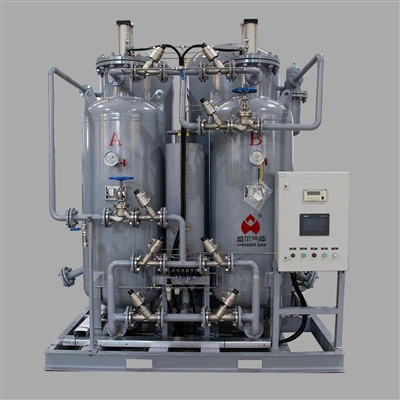
Hey there! As a supplier of cryogenic oxygen plants, I'm super stoked to walk you through how these amazing machines produce oxygen. It's a pretty cool process, and I'm gonna break it down for you in a way that's easy to understand.
The Basics of Cryogenic Oxygen Production
First things first, let's talk about what cryogenics is. Cryogenics is all about working with extremely low temperatures, usually below -150°C. In the case of a cryogenic oxygen plant, we use these frigid temperatures to separate oxygen from the other components in air, like nitrogen and argon.
The whole process starts with the air we breathe every day. Air is a mixture of gases, with about 78% nitrogen, 21% oxygen, and small amounts of other gases like argon, carbon dioxide, and neon. Our goal is to separate the oxygen from the rest of these gases to get high - purity oxygen.
Air Compression
The first step in the process is air compression. We use big compressors to suck in ambient air and compress it to a high pressure, usually around 6 - 10 bar. Compressing the air increases its temperature, so right after compression, we have to cool it down. This is usually done using coolers that use water or air to remove the heat generated during compression.
Once the air is compressed and cooled, we need to remove any impurities. The air can contain things like dust, water vapor, and carbon dioxide, which can cause problems later in the process if they're not removed. We use filters to remove the dust particles, and molecular sieves to get rid of the water vapor and carbon dioxide. Molecular sieves are like tiny sponges that trap these molecules based on their size.
Cooling and Liquefaction
After the air is clean, we start the cooling process. We use a series of heat exchangers to cool the compressed air down to very low temperatures. Heat exchangers are devices that transfer heat from one fluid to another without the two fluids actually mixing. As the air gets colder, it starts to get closer to its liquefaction point.
The key here is the use of the Joule - Thomson effect. When a compressed gas expands through a small opening, it cools down rapidly. We use this effect in our cryogenic oxygen plants to get the air really cold. We pass the compressed air through a throttle valve or an expander, and as it expands, it cools down to a point where it starts to turn into a liquid.
Once the air is mostly liquefied, we have a mixture of liquid nitrogen, liquid oxygen, and a small amount of liquid argon. These liquids have different boiling points, which is crucial for the next step in the process.
Distillation
The next step is distillation. We use a distillation column, which is like a tall tower, to separate the different components of the liquefied air. The basic principle behind distillation is that substances with different boiling points will vaporize at different temperatures.
In the distillation column, the liquefied air is fed at the middle. The part of the column at the top is colder, and the bottom is warmer. As the liquid moves up and down the column, the nitrogen, which has a lower boiling point (-196°C) than oxygen (-183°C), vaporizes first and rises to the top of the column. The oxygen, being heavier and with a higher boiling point, stays in the liquid state and collects at the bottom of the column.
The liquid oxygen at the bottom is usually around 99.5% pure. But we can further purify it if needed, depending on the specific requirements of our customers. For example, in medical applications, we need even higher - purity oxygen.
Storage and Delivery
Once we have our high - purity oxygen, we store it in large tanks. The oxygen can be stored in liquid form at very low temperatures or vaporized and stored under pressure in gas cylinders.
From the storage tanks, the oxygen can be delivered to our customers in different ways. For industrial customers who need a large amount of oxygen, we can use pipelines to transport the oxygen directly to their facilities. For smaller customers or those who need oxygen on - the - go, we can fill up cylinders and deliver them.
Applications and Our Products
Our cryogenic oxygen plants have a wide range of applications. One of the common uses is in the steel industry, where oxygen is used in the steel - making process to increase the efficiency of the furnace. It helps in burning the impurities in the iron ore and making high - quality steel.
Another big application is in the medical field. Hospitals need a constant supply of high - purity oxygen to treat patients with respiratory problems. Our cryogenic oxygen plants can produce the medical - grade oxygen that hospitals require.


If you're interested in the welding industry, you might want to check out our Welding Oxygen Production Plant. It's designed to meet the specific oxygen requirements for welding operations, providing the right amount of oxygen with high purity.
Our Air Separation Cold Box is an important part of the cryogenic oxygen plant. It's where all the magic of cooling and separation happens. It's engineered to handle the extreme cold temperatures and ensure efficient separation of the air components.
And if you're in the food packaging industry, we also offer Cryogenic Nitrogen For Food Packaging. Nitrogen can be used to displace oxygen in food packages, which helps in preserving the food and extending its shelf life.
Why Choose Our Cryogenic Oxygen Plants
We take pride in our cryogenic oxygen plants. Our plants are designed with the latest technology to ensure high efficiency, reliability, and low maintenance. We have a team of experts who are always ready to provide support and advice to our customers.
Whether you're a small business or a large industrial corporation, we have a cryogenic oxygen plant that can meet your needs. We can customize the plants based on your specific requirements, such as the amount of oxygen you need, the purity level, and the location of your facility.
Contact Us for Procurement
If you're interested in getting your hands on one of our top - notch cryogenic oxygen plants, don't hesitate to reach out. We're here to answer all your questions and guide you through the procurement process. Whether you want to know more about the technical details, the pricing, or the installation process, we've got you covered.
Just drop us a line, and our sales team will be in touch with you soon. We're looking forward to working with you and helping you get the oxygen production solution that's perfect for your business.
References
Perry, R. H., & Green, D. W. (1997). Perry's Chemical Engineers' Handbook (7th ed.). McGraw - Hill.
Gerritsen, E., & Lee, K. (2012). Cryogenic Air Separation Technology. Springer.