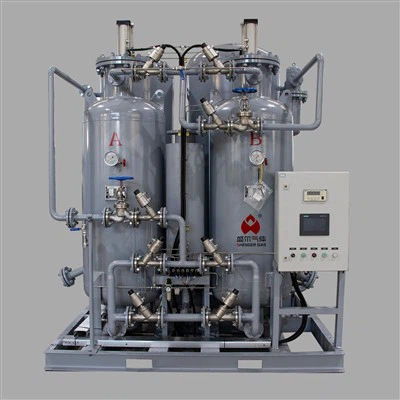
Hey there! As a supplier of 99% PSA Nitrogen Generators, I often get asked about the moisture content of the nitrogen produced by our machines. So, I thought I'd take a moment to break it down for you.
First off, let's talk about what PSA stands for. PSA is short for Pressure Swing Adsorption. It's a technology that separates nitrogen from other gases in the air, like oxygen and water vapor. In a PSA Nitrogen Generator, compressed air is passed through a bed of adsorbent material, usually zeolite, which selectively adsorbs oxygen and other impurities, leaving behind high-purity nitrogen.
Now, back to the question at hand: what's the moisture content of the nitrogen produced by a 99% PSA Nitrogen Generator? Well, it depends on a few factors, such as the quality of the incoming air, the operating conditions of the generator, and the type of adsorbent material used.
In general, a well-designed and properly maintained 99% PSA Nitrogen Generator can produce nitrogen with a moisture content of less than -40°C dew point. That's pretty dry! To put it in perspective, the dew point is the temperature at which water vapor in the air condenses into liquid water. So, a dew point of -40°C means that the nitrogen is so dry that any water vapor present in it would condense into ice at that temperature.
But why does the moisture content matter? Well, in many industrial applications, even small amounts of moisture can cause problems. For example, in the electronics industry, moisture can cause corrosion and short circuits in electronic components. In the food and beverage industry, moisture can promote the growth of bacteria and mold, leading to spoilage. And in the pharmaceutical industry, moisture can affect the stability and efficacy of drugs.
That's why it's important to choose a PSA Nitrogen Generator that can produce nitrogen with a low moisture content. At our company, we use high-quality adsorbent materials and advanced filtration systems to ensure that our generators produce nitrogen with a dew point of less than -40°C. We also offer optional moisture removal systems, such as desiccant dryers, to further reduce the moisture content of the nitrogen if needed.
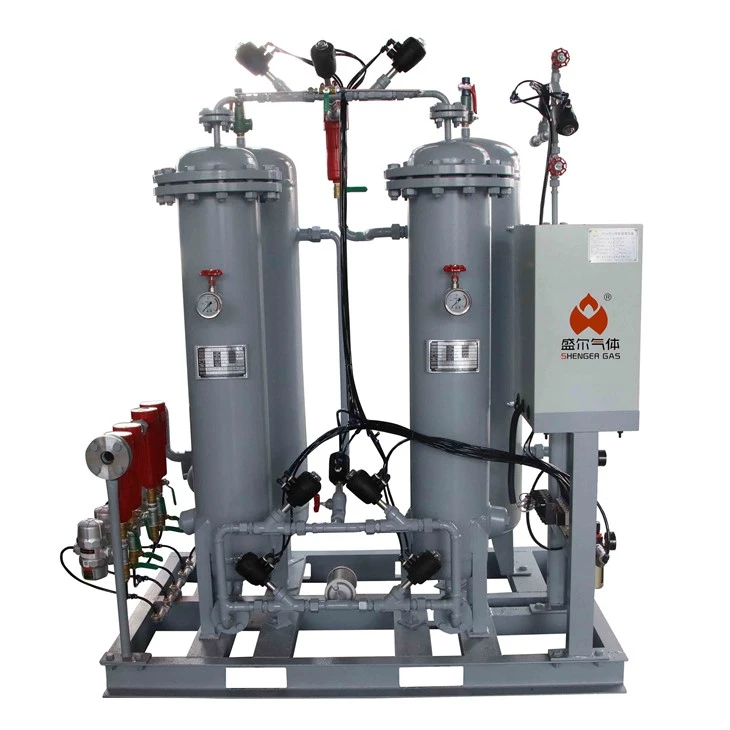

Now, let's talk about some of the applications of 99% PSA Nitrogen Generators. One of the most common applications is in the chemical industry, where nitrogen is used as an inert gas to prevent oxidation and combustion. Nitrogen is also used in the food and beverage industry to preserve the freshness and quality of products. In the electronics industry, nitrogen is used to purge and protect sensitive electronic components during manufacturing. And in the oil and gas industry, nitrogen is used for well stimulation and enhanced oil recovery.
If you're interested in learning more about our 99% PSA Nitrogen Generators, or if you have any questions about the moisture content of the nitrogen they produce, please don't hesitate to contact us for a quote. We'd be happy to help you find the right solution for your needs.
In addition to our standard 99% PSA Nitrogen Generators, we also offer a range of other nitrogen generation systems, including Nitrogen Generator System, Biological Nitrogen Production Equipment, and Nitrogen Generator For Tire Inflation. These systems are designed to meet the specific needs of different industries and applications, and we can customize them to fit your requirements.
So, if you're in the market for a nitrogen generator, whether it's for industrial, commercial, or personal use, we encourage you to contact us to discuss your options. Our team of experts is here to help you find the right solution for your needs, and we'll work with you every step of the way to ensure that you're satisfied with your purchase.
Thanks for reading! If you have any questions or comments, please feel free to leave them below. We'd love to hear from you.
References:
- Perry, R. H., & Green, D. W. (Eds.). (2008). Perry's Chemical Engineers' Handbook. McGraw-Hill.
- Kohl, A. L., & Nielsen, R. B. (1997). Gas Purification. Gulf Publishing Company.
- Yang, R. T. (1987). Gas Separation by Adsorption Processes. Butterworths.