As a supplier of 99.999 Nitrogen Generators, I am often asked about the working principle of these remarkable machines. In this blog post, I will delve into the details of how a 99.999 Nitrogen Generator operates, providing you with a comprehensive understanding of its functionality.
Introduction to Nitrogen Generation
Nitrogen is an essential gas used in various industries, including food and beverage, electronics, pharmaceuticals, and many others. The demand for high-purity nitrogen has been steadily increasing due to its numerous applications, such as inerting, blanketing, purging, and pressure testing. A 99.999 Nitrogen Generator is designed to produce nitrogen gas with a purity level of 99.999%, which means that it contains only 10 parts per million (ppm) of impurities.
Working Principle of a 99.999 Nitrogen Generator
The working principle of a 99.999 Nitrogen Generator is based on the process of Pressure Swing Adsorption (PSA). PSA is a technology that separates nitrogen from other gases in the air by using a molecular sieve. The molecular sieve is a porous material that has a high affinity for certain gases, such as oxygen and carbon dioxide, while allowing nitrogen to pass through.
Here is a step-by-step explanation of how a 99.999 Nitrogen Generator works:
Step 1: Air Compression
The first step in the nitrogen generation process is to compress the ambient air. The air is drawn into the compressor, where it is compressed to a high pressure, typically between 7 and 10 bar. Compressing the air increases its density, making it easier to separate the nitrogen from other gases.


Step 2: Air Filtration
After compression, the air passes through a series of filters to remove any contaminants, such as dust, oil, and water. These filters are essential to protect the molecular sieve from damage and ensure the purity of the nitrogen gas.
Step 3: PSA Separation
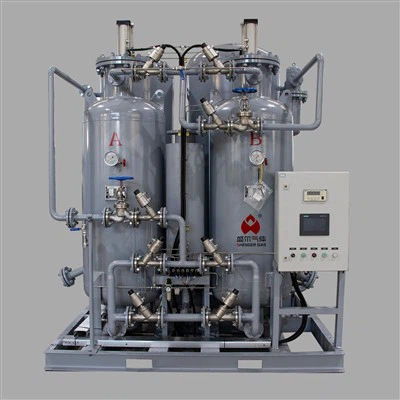
The filtered air then enters the PSA system, which consists of two adsorption vessels filled with a molecular sieve. The molecular sieve is typically made of zeolite, a crystalline aluminosilicate material that has a high surface area and a uniform pore size.
When the compressed air enters the adsorption vessel, the oxygen and other impurities are adsorbed onto the surface of the molecular sieve, while the nitrogen passes through and is collected as the product gas. The adsorption process is based on the difference in the adsorption affinity of the molecular sieve for different gases. Oxygen and other impurities have a higher affinity for the molecular sieve than nitrogen, so they are preferentially adsorbed.
The PSA system operates in a cyclic manner, with one adsorption vessel in the adsorption phase while the other is in the regeneration phase. During the adsorption phase, the compressed air flows through the adsorption vessel, and the nitrogen is produced. During the regeneration phase, the pressure in the adsorption vessel is reduced, and the adsorbed oxygen and other impurities are desorbed from the molecular sieve. The desorbed gases are then vented to the atmosphere.
The cycle time of the PSA system is typically between 1 and 2 minutes, depending on the size and capacity of the generator. By alternating the adsorption and regeneration phases between the two vessels, the PSA system can continuously produce high-purity nitrogen gas.
Step 4: Nitrogen Purification
After the PSA separation, the nitrogen gas may still contain some trace impurities, such as oxygen, carbon dioxide, and moisture. To achieve a purity level of 99.999%, the nitrogen gas is further purified using a catalytic purifier and a dryer.
The catalytic purifier removes any remaining oxygen and carbon monoxide by reacting them with hydrogen in the presence of a catalyst. The reaction produces water and carbon dioxide, which are then removed by the dryer.
The dryer removes any moisture from the nitrogen gas by using a desiccant material, such as silica gel or activated alumina. The desiccant adsorbs the moisture from the gas, leaving behind dry nitrogen gas.
Step 5: Nitrogen Storage and Distribution
The purified nitrogen gas is then stored in a buffer tank to ensure a continuous supply of nitrogen to the end-user. The buffer tank also helps to stabilize the pressure of the nitrogen gas and reduce any fluctuations in the flow rate.
From the buffer tank, the nitrogen gas is distributed to the end-user through a pipeline system. The pipeline system is designed to deliver the nitrogen gas at the required pressure and flow rate to the specific applications.
Applications of 99.999 Nitrogen Generators
99.999 Nitrogen Generators are used in a wide range of applications across various industries. Here are some examples:
-
Food and Beverage Industry: Nitrogen is used in the food and beverage industry for packaging, inerting, and blanketing. It helps to prevent the oxidation of food products, extend their shelf life, and maintain their quality. For example, nitrogen is used to fill the headspace in beer bottles and cans to prevent the oxidation of the beer and maintain its flavor and freshness. Beer Nitrogen Generator
-
Electronics Industry: Nitrogen is used in the electronics industry for soldering, wave soldering, and reflow soldering. It helps to prevent the oxidation of the solder and the electronic components, ensuring a high-quality solder joint. Nitrogen is also used in the production of semiconductors and other electronic devices to create an inert atmosphere and prevent contamination. Nitrogen Generator for Fiber Laser
-
Pharmaceutical Industry: Nitrogen is used in the pharmaceutical industry for packaging, inerting, and purging. It helps to prevent the oxidation of pharmaceutical products, maintain their stability, and extend their shelf life. Nitrogen is also used in the production of drugs and other pharmaceutical products to create an inert atmosphere and prevent contamination. Medical Nitrogen Generator
-
Chemical Industry: Nitrogen is used in the chemical industry for inerting, blanketing, and purging. It helps to prevent the oxidation of chemicals, reduce the risk of explosion, and maintain the quality of the products. Nitrogen is also used in the production of fertilizers, plastics, and other chemical products.
Advantages of Using a 99.999 Nitrogen Generator
There are several advantages of using a 99.999 Nitrogen Generator compared to other methods of nitrogen supply, such as liquid nitrogen or cylinder gas:
-
Cost Savings: A 99.999 Nitrogen Generator can significantly reduce the cost of nitrogen supply compared to liquid nitrogen or cylinder gas. The cost of producing nitrogen on-site is typically lower than the cost of purchasing nitrogen from a supplier, especially for high-volume users.
-
Convenience and Reliability: A 99.999 Nitrogen Generator provides a continuous supply of nitrogen gas on-site, eliminating the need for frequent deliveries of liquid nitrogen or cylinder gas. This ensures a reliable supply of nitrogen gas and reduces the risk of production downtime due to nitrogen shortages.
-
Purity and Quality: A 99.999 Nitrogen Generator can produce high-purity nitrogen gas with a purity level of 99.999%, which is suitable for most applications. The purity of the nitrogen gas can be easily controlled and monitored, ensuring consistent quality and performance.
-
Environmental Friendliness: A 99.999 Nitrogen Generator is an environmentally friendly alternative to liquid nitrogen or cylinder gas. It does not produce any greenhouse gas emissions or other pollutants, and it reduces the need for transportation and storage of nitrogen, which helps to conserve energy and reduce the carbon footprint.
Conclusion
In conclusion, a 99.999 Nitrogen Generator is a reliable and cost-effective solution for producing high-purity nitrogen gas on-site. The working principle of a 99.999 Nitrogen Generator is based on the process of Pressure Swing Adsorption (PSA), which separates nitrogen from other gases in the air by using a molecular sieve. The PSA system operates in a cyclic manner, with one adsorption vessel in the adsorption phase while the other is in the regeneration phase. By alternating the adsorption and regeneration phases between the two vessels, the PSA system can continuously produce high-purity nitrogen gas.
If you are interested in learning more about our 99.999 Nitrogen Generators or would like to discuss your specific nitrogen requirements, please contact us for a consultation. Our team of experts will be happy to assist you in selecting the right nitrogen generator for your application and providing you with a customized solution.
References
- "Pressure Swing Adsorption" by R. T. Yang, Butterworth-Heinemann, 1987.
- "Zeolite Molecular Sieves: Structure, Chemistry, and Use" by D. W. Breck, John Wiley & Sons, 1974.
- "Nitrogen Generation: A Comprehensive Guide" by Nitrogen Generation Association, 2023.