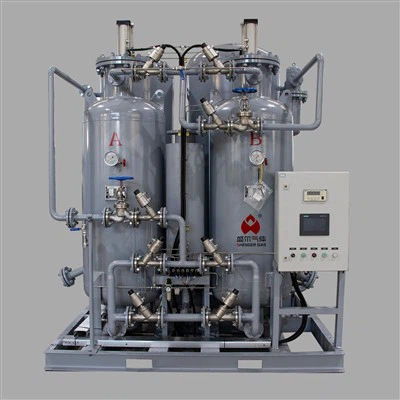
When it comes to nitrogen generation units, one crucial factor that often gets overlooked is the noise level. As a reputable nitrogen generation unit supplier, we understand the importance of not only providing high - quality nitrogen but also ensuring that our equipment operates with minimal disruption to your work environment. In this blog, we will delve into the noise levels of nitrogen generation units, what affects them, and how we address these concerns.
Understanding Noise Levels in Nitrogen Generation Units
Noise levels in nitrogen generation units are typically measured in decibels (dB). The decibel scale is logarithmic, which means that a small increase in the decibel value represents a significant increase in the actual sound intensity. For example, a 10 - dB increase represents a ten - fold increase in sound intensity.
The noise produced by a nitrogen generation unit mainly comes from several components. The air compressor is one of the primary sources of noise. Compressing air requires a significant amount of energy, and the mechanical operation of the compressor, including the movement of pistons or rotors, generates vibrations that are translated into sound waves. Additionally, the cooling fans used to dissipate heat from the compressor and other components also contribute to the overall noise level.
Factors Affecting Noise Levels
Compressor Type
There are different types of compressors used in nitrogen generation units, such as piston compressors and screw compressors. Piston compressors tend to be noisier than screw compressors. Piston compressors operate with a reciprocating motion, which creates more mechanical vibrations and thus more noise. Screw compressors, on the other hand, have a more continuous and smooth operation, resulting in relatively lower noise levels.
Size and Capacity
Larger nitrogen generation units with higher capacities generally produce more noise. This is because they require more powerful compressors and larger cooling systems to handle the increased workload. As the size of the compressor and other components increases, so does the amount of mechanical movement and heat generation, leading to higher noise levels.


Installation and Location
The way a nitrogen generation unit is installed can significantly impact its noise level. If the unit is not properly installed on a stable and vibration - absorbing surface, the vibrations can be transmitted to the surrounding structure, amplifying the noise. Additionally, the location of the unit also matters. Placing the unit in an enclosed space without proper sound insulation can cause the noise to bounce off the walls and increase the overall perceived noise level.
Noise Levels of Different Nitrogen Generation Units
Oil Extraction Nitrogen Generator
The Oil Extraction Nitrogen Generator is designed to meet the specific requirements of the oil extraction industry. These units often need to operate continuously and may have relatively high - capacity compressors. Depending on the model and compressor type, the noise level of an oil extraction nitrogen generator can range from 70 dB to 85 dB. At 70 dB, it is comparable to the noise level of a busy office, while at 85 dB, it is similar to the noise of heavy traffic.
High Purity Nitrogen Plant For Electronics
The High Purity Nitrogen Plant For Electronics is used in the electronics manufacturing industry, where a clean and quiet working environment is crucial. These units are usually equipped with more advanced and quieter compressor technologies. The noise level of a high - purity nitrogen plant for electronics typically ranges from 60 dB to 75 dB. A noise level of 60 dB is similar to the sound of normal conversation, making it suitable for electronics manufacturing facilities where employees need to communicate effectively.
Lab Nitrogen Generator
The Lab Nitrogen Generator is designed for laboratory applications, where a low - noise environment is essential to avoid interfering with sensitive experiments. These units are often smaller in size and use more compact and quiet compressors. The noise level of a lab nitrogen generator is usually below 60 dB, which is close to the background noise level in a quiet library.
How We Address Noise Concerns
As a nitrogen generation unit supplier, we are committed to providing our customers with products that not only meet their nitrogen production needs but also minimize noise pollution. We take several measures to reduce the noise levels of our units.
Advanced Compressor Technology
We use the latest compressor technologies, such as screw compressors with low - vibration designs. These compressors are engineered to operate more smoothly and quietly, reducing the noise generated during the compression process.
Sound Insulation
Our nitrogen generation units are equipped with high - quality sound insulation materials. These materials are used to line the enclosure of the unit, absorbing and dampening the sound waves generated by the compressor and other components. This helps to reduce the noise level that is transmitted to the surrounding environment.
Vibration Isolation
We install vibration isolation mounts on our units to prevent the vibrations from the compressor and other moving parts from being transmitted to the floor or other structures. By isolating the vibrations, we can significantly reduce the noise that is amplified through the building structure.
Importance of Low - Noise Nitrogen Generation Units
In many industries, a low - noise work environment is essential for several reasons. In the electronics manufacturing industry, a quiet environment is necessary to ensure the accuracy of sensitive equipment and to prevent distractions for employees. In laboratories, low - noise nitrogen generation units are crucial to avoid interfering with experiments and to maintain a calm and focused working atmosphere.
Moreover, in some workplaces, excessive noise can pose a health risk to employees. Prolonged exposure to high - noise levels can lead to hearing loss, stress, and other health problems. By providing low - noise nitrogen generation units, we help our customers create a safer and more comfortable work environment for their employees.
Contact Us for Your Nitrogen Generation Needs
If you are in the market for a nitrogen generation unit and are concerned about noise levels, we are here to help. Our team of experts can provide you with detailed information about the noise levels of our different models and help you choose the right unit for your specific requirements. Whether you need an Oil Extraction Nitrogen Generator, a High Purity Nitrogen Plant For Electronics, or a Lab Nitrogen Generator, we have the solution for you.
References
- "Industrial Noise Control and Acoustics" by Craig A. Hansen.
- "Compressor Technology Handbook" by Heinz P. Bloch.