


Nitrogen Generator For Beer Brewing
Oxygen ruins beer flavor. That's not an opinion. It's basic brewing physics.
From cold wort aeration (the only time you actually want oxygen), to fermenter blanketing, line purging, and pre-fill flushing - everywhere else gas is used, oxygen is a contaminant. Liquid nitrogen works, but at a cost: price swings, uncertain purity batch to batch, and the real risk of supply interruption. A fermenter doesn't wait.
That's why mid-sized breweries are moving to on-site generation. A nitrogen generator for beer brewing installed at your facility cuts gas costs by 60–70% as a baseline. More importantly, you can see the purity yourself.
How PSA adapts to fermentation rhythm
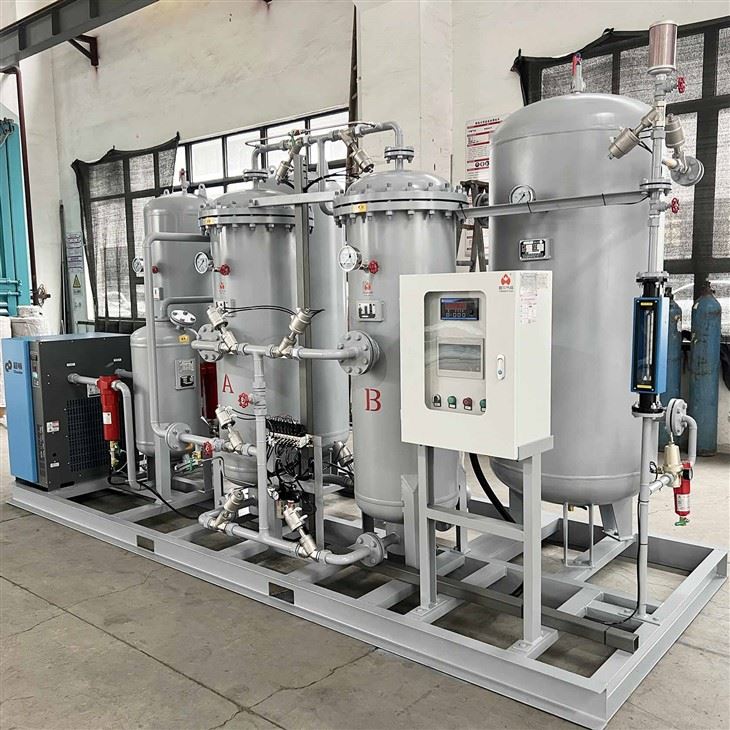
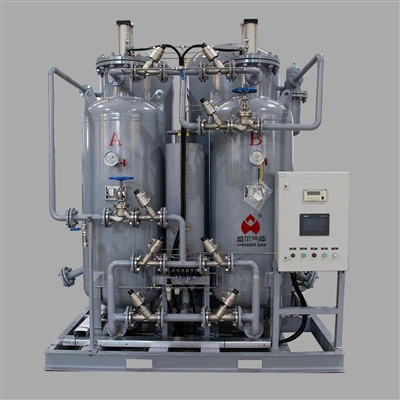
We use dual-tower pressure swing adsorption. Not membrane. Not cryogenic.
Carbon molecular sieves adsorb oxygen, moisture, and residual CO₂ under pressure - nitrogen passes through. Release pressure, impurities desorb and vent. Two towers alternate, continuous nitrogen out.
Most industrial generators switch on a fixed cycle. But fermentation demand isn't steady - high instantaneous flow during carbonation, then just a small make-up during sealed tank holding. Fixed cycles cause pressure differential dips at low flow, and purity wobbles. We added flow-predictive buffer logic in the valve control.
Purity and flow: measured, not calculated
For brewing-grade nitrogen, the key isn't "what's the maximum possible" - it's whether purity stays stable through the entire usage cycle.
For a nitrogen generator for beer brewing, we define three standard operating points:
1. Standard protection: 99.5%–99.9% purity, 2–50 Nm³/h flow (matches 1–50 ton fermenters)
2. Blanketing / filling purge: 99.0%–99.5% purity, flow sized at 1.2x peak demand
3. Low-oxygen process: up to 99.99% - requires fine deoxidation module, not standard
Every flow value is measured one meter from the outlet. Theoretical numbers are for brochures. We don't sign acceptance papers with those. At the same purity, compressed air consumption per unit of nitrogen is 8–10% below industry average. See the energy table below.
Temperature and site conditions
Brewhouses get hot in summer and cold in winter. That's not a design flaw - it's reality.
Inlet air: 0–45°C (ambient compressed air after cooling)
Ambient: 5–50°C
Standard:
Automatic inlet heating (for cold starts)
Forced-air cooling shroud (no derating in high heat)
Plug it in. It runs. No "indoor ideal environment only" disclaimers - those are written to avoid responsibility, not to help you run a brewery.
Energy: the hidden cost
Brewing margins are thin. Gas-related power consumption gets overlooked.
Using a 10 Nm³/h, 99.5% purity nitrogen generator for beer brewing as reference:
| Parameter | Industry Avg | Measured |
| Compressed air consumption | 4.2–4.5 Nm³ air / Nm³ N₂ | 3.9 |
| Total installed power (incl. compressor) | 7.5–8.5 kW | 6.8–7.2 |
| Standby power | None or 40% load | 15% load (smart sleep) |
Running 8,000 hours per year, electricity savings come to roughly USD 1,100–1,650 (at $0.11/kWh). Not huge money, but not money you should throw away either.
Technical specifications (standard)
Model: SNB-10P (brewing version)
Output: 10 Nm³/h @ 99.5%
Outlet pressure: 4–8 bar, adjustable
Dew point: ≤ -40°C (atmospheric, no liquid water carryover)
Particulate: ≤ 0.01μm (with sterilizing filter)
Control: PLC fully automatic + remote start/stop dry contact
Protection: IP54 (splash-proof, suitable for washdown zones)
Where it fits in the brewing chain
Actual nitrogen usage points:
1. Fermenter blanketing - prevent vacuum draw, stop air from getting in
2. Line purge before wort aeration - push residual oxygen out before yeast pitching
3. Carbonation blending - nitrogen stout needs specific N₂/CO₂ ratios
4. Bright beer tank top coverage - inert gas layer for long-term storage
5. Filler bowl pressurization - isobaric filling, less foam
If your use case isn't listed - dry hop protection with nitrogen, or backwashing filter membranes - just say what you need. Those have been done before.
Delivery: four milestones
1. Process confirmation (3 days) - tank volume, peak flow, pressure. You provide. We return P&ID and energy spreadsheet.
2. Pre-shipment acceptance (15–20 working days) - witness purity and flow testing on-site or by video.
3. On-site installation & commissioning (1–2 days) - our test logger, our report.
4. Trial run accompaniment (3 shifts) - you sign off, we leave.
Accompanied commissioning is standard. Not a premium service.
Customization: three things a standard model won't do
Different batches, different beer styles - different nitrogen requirements.
1. Dual purity - need both 99.9% and 99.99%? Add a side-stream fine deoxidation tower. One unit, two grades.
2. Small skid + buffer tank - peak demand only during the 4-hour filling window? Don't overspend on a big unit.
3. Gas blending - 70% N₂ / 30% CO₂. Add a static mixer and proportional valve.
You don't need to understand nitrogen generation. Just tell us how you brew.
Service: two things written into the contract
1. Response - fault notification received. Remote diagnosis within 2 hours (PLC has built-in 4G, logs upload automatically). On-site needed? 48 hours for domestic locations.
2. Spare parts - molecular sieve. Use it per the manual. Purity drops more than 0.5% within 3 years? We replenish or replace at no charge. Oil contamination from your side is not included.
Compressed air quality determines how long the generator lasts. We'll check your upstream compressor's oil and moisture removal and tell you what needs fixing - even if that compressor didn't come from us.
One more thing about brewing applications
Every nitrogen generator for beer brewing is aged on a dynamic gas consumption platform that simulates fermenter pressure fluctuations. Not a static hold test. Static tests don't catch problems.
For extremely low demand (<0.5 Nm³/h), we'll tell you to use bottled nitrogen. Pushing an unsuitable unit makes no sense.
Shenger Gas designs every valve, molecular sieve bed, and control logic around the brewing process. If you're evaluating an on-site nitrogen solution for your beer line, bring your last month's gas usage log or fermenter parameter sheet. You'll get an Excel energy comparison table and a factory test video.


Hot Tags: nitrogen generator for beer brewing, China nitrogen generator for beer brewing manufacturers, suppliers, factory
You Might Also Like




Send Inquiry