
In the industrial and scientific fields, nitrogen gas is widely used for its inert properties, which make it an ideal choice for applications such as purging, blanketing, and protecting sensitive materials from oxidation. Dry nitrogen generators have become essential equipment for producing on - site nitrogen, meeting the diverse needs of various industries. Among them, high - purity and general - purity dry nitrogen generators are two common types, each with its own unique features and applications. As a dry nitrogen generator supplier, I'd like to delve into the differences between these two types of generators to help you make a more informed decision.
Purity Level
The most obvious difference between high - purity and general - purity dry nitrogen generators lies in the purity of the nitrogen they produce. General - purity dry nitrogen generators typically offer nitrogen purity in the range of 95% - 99%. This level of purity is sufficient for many common applications, such as food packaging, where nitrogen is used to displace oxygen and extend the shelf life of products. The Nitrogen Generator For Packaging is often a general - purity generator, as the relatively lower purity nitrogen can effectively prevent spoilage and maintain the quality of food items.
On the other hand, high - purity dry nitrogen generators can produce nitrogen with a purity of up to 99.999%. This extremely high level of purity is required in applications where even the slightest presence of impurities can cause significant problems. For example, in the semiconductor manufacturing industry, high - purity nitrogen is used to create a clean and inert environment during the production process. Any trace of oxygen or moisture can contaminate the semiconductor wafers, leading to defective products. Our Solar Nitrogen Generator is designed to meet the high - purity nitrogen requirements in the solar energy industry, where high - quality nitrogen is crucial for the production of solar cells.
Production Technology
The difference in purity levels is mainly due to the different production technologies employed by high - purity and general - purity dry nitrogen generators. General - purity generators often use Pressure Swing Adsorption (PSA) technology. PSA works by passing compressed air through a bed of adsorbent material, such as carbon molecular sieve (CMS). The CMS selectively adsorbs oxygen, water vapor, and other impurities, allowing nitrogen to pass through. This process is relatively simple and cost - effective, making it suitable for producing nitrogen at a general purity level.
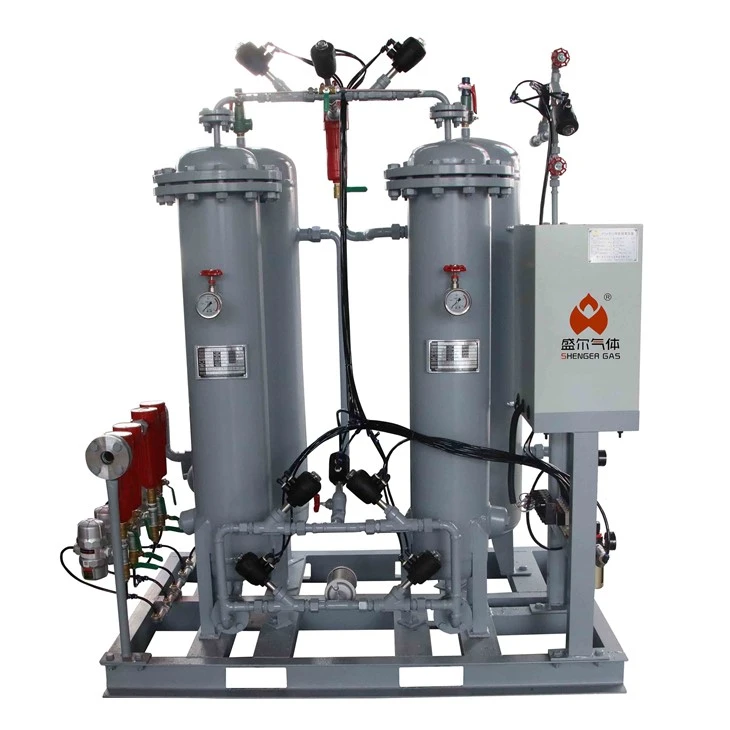

High - purity dry nitrogen generators, however, may use more advanced technologies in addition to PSA. For instance, membrane separation technology can be combined with PSA to further purify the nitrogen. Membrane separation works based on the different permeation rates of gases through a semi - permeable membrane. Oxygen, water vapor, and other impurities permeate through the membrane more quickly than nitrogen, resulting in a higher - purity nitrogen stream. In some cases, catalytic purification is also used to remove trace amounts of oxygen and other reactive impurities. Our Biological Nitrogen Production Equipment may incorporate these advanced purification technologies to ensure the production of high - purity nitrogen for biological research and pharmaceutical applications.
Cost
Cost is another important factor to consider when comparing high - purity and general - purity dry nitrogen generators. General - purity generators are generally more affordable in terms of both the initial purchase cost and the operating cost. The simpler production technology and lower - grade components used in general - purity generators contribute to their lower price. Additionally, the energy consumption of general - purity generators is relatively lower, as they do not require the additional purification steps needed to achieve high purity.
High - purity dry nitrogen generators, on the other hand, are more expensive. The advanced production technologies, high - quality components, and additional purification processes increase the manufacturing cost. Moreover, the operating cost of high - purity generators is also higher, mainly due to the increased energy consumption and the need for more frequent replacement of adsorbent materials and membranes.
Application Scope
The application scope of high - purity and general - purity dry nitrogen generators is closely related to their purity levels. General - purity nitrogen is widely used in industries where a moderate level of purity is sufficient. In addition to food packaging, it is also used in the chemical industry for inerting storage tanks and pipelines, in the metal processing industry for annealing and brazing processes, and in the electronics industry for soldering operations.
High - purity nitrogen is essential in applications where strict purity requirements are necessary. In the aerospace industry, high - purity nitrogen is used for purging and pressurizing fuel systems to prevent combustion and explosion. In the pharmaceutical industry, it is used for protecting sensitive drugs from oxidation and microbial contamination during the manufacturing and storage processes. In the laboratory environment, high - purity nitrogen is used for gas chromatography and other analytical instruments, where the presence of impurities can affect the accuracy of the analysis.
Maintenance Requirements
High - purity and general - purity dry nitrogen generators also differ in their maintenance requirements. General - purity generators are relatively easy to maintain. The PSA system in general - purity generators usually requires periodic replacement of the adsorbent material, typically every 2 - 3 years, depending on the operating conditions. The filters in the system also need to be replaced regularly to ensure the proper operation of the generator.
High - purity dry nitrogen generators, however, demand more rigorous maintenance. The additional purification components, such as membranes and catalytic converters, need to be carefully monitored and replaced at appropriate intervals. The operating parameters of the generator, such as pressure, temperature, and flow rate, need to be precisely controlled to maintain the high purity of the nitrogen output. Regular calibration and testing are also necessary to ensure the performance and reliability of the high - purity generator.
Conclusion
In summary, high - purity and general - purity dry nitrogen generators have significant differences in purity level, production technology, cost, application scope, and maintenance requirements. When choosing a dry nitrogen generator, you should carefully consider your specific needs, including the required purity of nitrogen, the scale of production, and the budget. As a professional dry nitrogen generator supplier, we have a wide range of products to meet different customer requirements. Whether you need a general - purity generator for common industrial applications or a high - purity generator for specialized industries, we can provide you with the most suitable solution.
If you are interested in our dry nitrogen generators or have any questions about the selection and application of nitrogen generators, please feel free to contact us for further discussion. We are committed to providing you with high - quality products and professional services to help you achieve your production goals.
References
- "Industrial Gas Handbook: Gas Separation and Purification" by Angelo Basile
- "Nitrogen Generation: Principles and Applications" by John Doe


