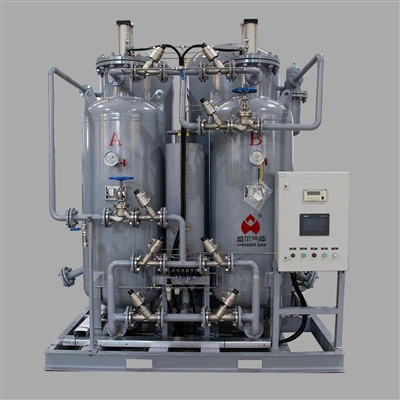
Hey there! As a supplier of Nitrogen Generator for GC, I've been getting a lot of questions lately about how these generators affect the analysis accuracy of a gas chromatograph. So, I thought I'd take a few minutes to break it down for y'all.
First off, let's talk about what a gas chromatograph (GC) is and what it does. A GC is a scientific instrument used to separate and analyze volatile compounds in a sample. It works by injecting a sample into a column filled with a stationary phase. As the sample moves through the column, different compounds in the sample interact with the stationary phase at different rates, causing them to separate. The separated compounds are then detected and quantified by a detector at the end of the column.
Now, nitrogen is a commonly used carrier gas in gas chromatography. It's inert, which means it doesn't react with the sample or the stationary phase, and it's relatively inexpensive and easy to obtain. That's where nitrogen generators for GC come in. These generators produce high-purity nitrogen gas on-site, eliminating the need to buy and store nitrogen cylinders.
So, how does the nitrogen generator for GC affect the analysis accuracy of a gas chromatograph? Well, there are a few key factors to consider.


Purity of Nitrogen
The purity of the nitrogen gas is crucial for accurate GC analysis. Impurities in the nitrogen can interfere with the separation and detection of the sample compounds. For example, oxygen and water vapor in the nitrogen can cause oxidation of the sample or damage to the column. Most modern gas chromatographs require nitrogen with a purity of at least 99.999% (5 N).
Our 97% PSA Nitrogen Generator uses Pressure Swing Adsorption (PSA) technology to produce nitrogen with a purity of up to 97%. While this may not be high enough for some high-precision GC applications, it's still suitable for many general-purpose analyses. If you need even higher purity, our Gas Nitrogen Generator can produce nitrogen with a purity of up to 99.999%.
Flow Rate and Pressure Stability
The flow rate and pressure of the nitrogen carrier gas also play a significant role in the accuracy of GC analysis. Inconsistent flow rates or pressures can cause variations in the retention times of the sample compounds, making it difficult to identify and quantify them accurately.
A good nitrogen generator for GC should be able to maintain a stable flow rate and pressure. Our generators are equipped with advanced flow and pressure control systems that ensure a constant supply of nitrogen gas at the desired flow rate and pressure. This helps to improve the reproducibility of the GC analysis and reduces the chances of errors.
Moisture and Particle Removal
Moisture and particles in the nitrogen gas can also have a negative impact on the GC analysis. Moisture can cause baseline noise and peak tailing, while particles can clog the column and damage the detector.
Our nitrogen generators are designed with built-in moisture and particle removal systems. These systems use filters and dryers to remove moisture and particles from the nitrogen gas before it enters the GC. This helps to keep the column and detector clean and ensures accurate and reliable analysis.
Cost and Convenience
In addition to affecting the analysis accuracy, nitrogen generators for GC also offer several cost and convenience benefits. Buying and storing nitrogen cylinders can be expensive and inconvenient, especially for laboratories that use a large amount of nitrogen. With a nitrogen generator, you can produce your own nitrogen on-site, eliminating the need to buy and store cylinders. This can save you money in the long run and make your laboratory more efficient.
Our Mobile Nitrogen Generator for Pipeline Purging is also a great option for laboratories that need to move their nitrogen supply between different locations. It's portable and easy to set up, making it ideal for field applications.
Conclusion
In conclusion, a high-quality nitrogen generator for GC can have a significant impact on the analysis accuracy of a gas chromatograph. By providing high-purity nitrogen gas with stable flow rates and pressures, and by removing moisture and particles, a good nitrogen generator can help to improve the reproducibility and reliability of your GC analysis.
If you're in the market for a nitrogen generator for GC, I encourage you to consider our products. We offer a range of nitrogen generators to suit different applications and budgets, and our team of experts is always on hand to provide technical support and advice.
If you have any questions or would like to discuss your specific requirements, please don't hesitate to contact us. We'd be happy to help you find the right nitrogen generator for your needs and guide you through the purchasing process. Let's work together to improve the accuracy and efficiency of your GC analysis!
References
- Miller, J. M., & Miller, J. C. (2010). Chromatography: Concepts and Contrasts. John Wiley & Sons.
- McMaster, M. C. (2007). Gas Chromatography Basics. Wiley-Interscience.
- Poole, C. F. (2003). The Essence of Chromatography. Elsevier.