


Nitrogen Generator For Metal 3D Printing
Metal additive manufacturing is an oxygen-sensitive process. In laser powder bed fusion, residual oxygen reacts with hot metal, alters melt pool surface tension, creates spatter, and can shift alloy chemistry. A nitrogen generator for metal 3d printing supplies high-purity N₂ on demand, keeping the chamber inside its oxygen window without depending on delivered liquid nitrogen. Nitrogen is not universal, however. Titanium and aluminum react with N₂ at melt temperature, forming TiN or AlN. For those alloys, argon remains the correct choice. For stainless steels, tool steels, nickel alloys, and cobalt-chrome, nitrogen is often acceptable and, in some high-nitrogen steels, intentional.
PSA Separation: A Molecular Race
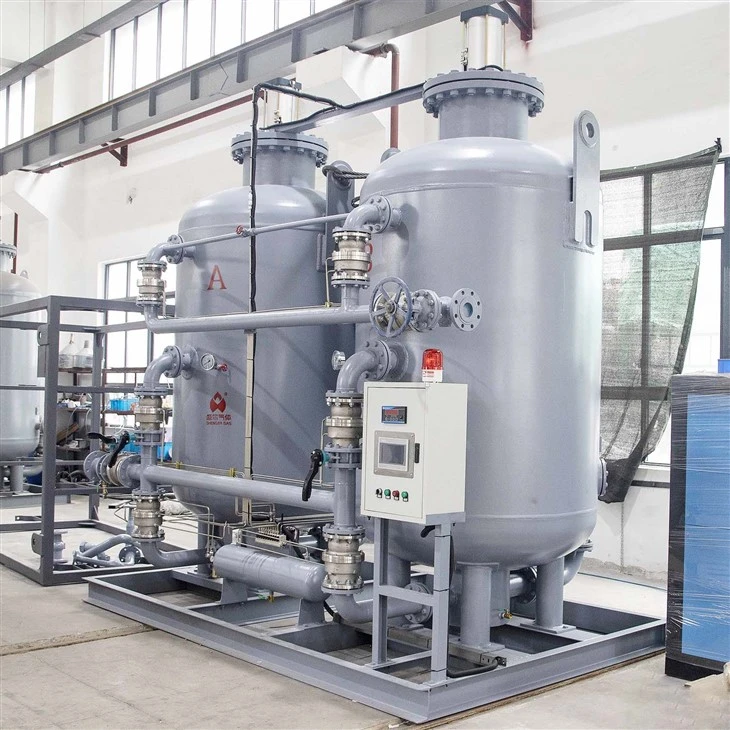
Most high-purity systems use pressure swing adsorption. Compressed air passes through carbon molecular sieve (CMS). Oxygen has a smaller kinetic diameter (0.346 nm) than nitrogen (0.364 nm), so O₂ enters the CMS pores faster. Nitrogen exits as product. Two beds alternate: adsorption, equalization, blowdown, purge, and repressurization. Equalization recovers pressure energy and improves efficiency. For 99.999% purity, a catalytic de-oxo unit uses hydrogen to convert residual O₂ to water, which a dryer then removes. Dew point can reach -70°C.
Purity and Flow Reference
| Purity | O₂ Content | Flow (Nm³/h) | Typical Use |
|---|---|---|---|
| 99.9% | ≤1000 ppm | 5–200 | Powder sieving, conveying, initial purge |
| 99.99% | ≤100 ppm | 10–150 | Stainless/tool steel LPBF, Ni alloys |
| 99.999% | ≤10 ppm | 20–100 | High-purity builds, superalloys |
| 99.9995% | ≤5 ppm | 30–80 | Specialty steels, electronics, not Ti/Al |
Note: Ti and Al usually require argon, not nitrogen.
Temperature, Energy, and Hidden Variables
Ambient operating range: 5–45°C. Inlet air above 45°C reduces CMS capacity and can lower purity, so pre-cooling is needed. Energy consumption is typically 0.35–0.55 kWh per Nm³ at 99.99–99.999%. A 50 Nm³/h unit may draw 22–30 kW. Feed air must be oil-free and dry. ISO 8573-1 Class 1.4.1 or better protects CMS from oil and moisture. Buffer tank sizing matters: chamber purge can demand high transient flow, while the build phase needs steady make-up gas. Oxygen analyzers should be calibrated; a single ppm reading is not enough if the sensor drifts.
Technical Parameters
Working pressure: 0.6–0.8 MPa adjustable. Pressure dew point: -40 to -70°C. Noise: ≤75 dB(A). Control: PLC with touchscreen, Modbus-ready. Switching time: programmable. Vessel design: ASME VIII or PED 2014/68/EU.
Industrial Applications
Beyond LPBF, these systems support DED shielding, binder jetting sintering, powder metallurgy, laser welding, electronics reflow, and chemical inerting. In AM facilities, nitrogen also covers powder recovery and depowdering. A nitrogen generator for metal 3d printing is often paired with an oxygen analyzer and buffer vessel to match chamber leak rate and powder surface area. Powder can outgas moisture and oxygen, so the generator must handle that load, not just fill the chamber once.
Certification, Customization, and Service
Units carry CE, ISO 9001, PED, and IEC-compliant electrical components. Because chamber volumes, air exchange rates, and alloy systems vary, a nitrogen generator for metal 3d printing is rarely off-the-shelf. Flow, purity, dew point, interface dimensions, redundancy, and control integration are configured against the customer's compressor output and chamber protocol. Service includes selection calculation, piping layout, commissioning, CMS replacement, and valve maintenance. Core components-CMS, valves, PLC-come from established suppliers, keeping spare parts lead times practical.
Shenger Gas builds nitrogen generator for metal 3d printing systems around real chamber behavior: purge cycles, leak rates, powder handling, and alloy compatibility. Their engineering approach treats purity, flow, and dew point as one specification rather than separate numbers. For shops running stainless, nickel, or tool steel, that matched design keeps oxygen stable from first purge to final layer.


Hot Tags: nitrogen generator for metal 3d printing, China nitrogen generator for metal 3d printing manufacturers, suppliers, factory
You Might Also Like


Send Inquiry