



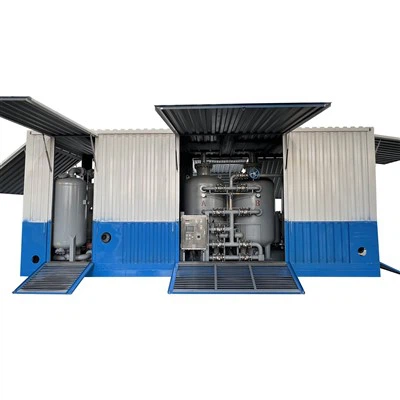
Compact Membrane Nitrogen Generator For Laboratory
In laboratory-scale gas separation applications, liquid nitrogen dewars and cylinder gases have long served as conventional supply options. However, in routine operations, frequent cylinder changeovers, evaporative losses from liquid nitrogen storage, and supply continuity constraints can introduce unnecessary procedural interruptions. A compact membrane nitrogen generator for laboratory offers a more direct alternative for addressing these operational considerations.
Operating Principle: Selective Permeation-Based Physical Separation
The core operational mechanism relies on the selective permeation characteristics of hollow fiber membrane assemblies. Under differential partial pressure driving forces, "fast" gas components-including oxygen and water vapor-exhibit higher dissolution-diffusion rates through the membrane wall matrix compared to "slow" components such as nitrogen. When adequately filtered and conditioned compressed air passes through the membrane bore at specified pressure and temperature conditions, the preferentially permeating gases diffuse outward through the membrane wall, while nitrogen molecules are retained within the lumen and concentrate along the flow path to form the product stream.
Distinct from pressure swing adsorption or cryogenic distillation processes, this separation method does not require pressure cycling or external refrigeration sources. The continuous separation is achieved through intrinsic differences in gas permeation rates across the membrane material. Consequently, the system configuration remains compact, with minimal moving components, enabling sustained nitrogen delivery without operator intervention. The relatively low acoustic and vibrational emissions of a compact membrane nitrogen generator for laboratory are also worth noting for laboratory settings where ambient noise control may be a consideration.
Performance Reference Ranges
The following parameters represent typical operating windows for this equipment class. Actual values are subject to reasonable variation depending on feed air quality and ambient temperature conditions:
| Parameter | Range |
|---|---|
| Nitrogen Purity | 95% – 99.5% |
| Flow Capacity | 5 – 200 Nm³/h |
| Operating Pressure | 0.7 – 1.0 MPa |
| Pressure Dew Point | ≤ -40℃ |
| Ambient Temperature Range | 5℃ – 45℃ |
A non-linear relationship exists between purity level and available effective flow rate. For instance, raising purity requirements from 99% to 99.5% typically results in a notable reduction in usable product gas volume. Selection decisions should therefore be based on actual application purity thresholds rather than pursuit of maximum achievable purity. For analytical instruments requiring specific nitrogen purity grades, additional purification modules may be incorporated downstream.
Energy Consumption and Operating Cost Characteristics
The power consumption of membrane nitrogen generation systems is primarily attributed to the air compressor and upstream refrigeration dryer components. Compared to liquid nitrogen vaporization supply methods at equivalent purity and flow specifications, on-site generation via membrane separation generally achieves a 40%–60% reduction in comprehensive gas supply costs. This economic advantage stems from the absence of thermal energy input for the separation process itself, along with elimination of daily evaporative losses from liquid nitrogen storage and associated transportation expenditures. For laboratories with moderate purity requirements (95%–99%), a compact membrane nitrogen generator for laboratory often represents the most cost-effective on-site supply approach.
Industrial Application Context
Within industrial and research infrastructures, these systems are commonly deployed in the following applications:
- Gas Chromatography Carrier Gas: Providing a continuous, stable carrier gas source for detectors
- ICP Spectrometer Auxiliary Gas: Meeting the flow and pressure requirements for nebulizers and plasma stabilization
- Solvent Evaporation and Purging: Supplying inert purge protection during sample preparation
- Material Surface Treatment: Participating in low-temperature atmosphere conditioning for surface modification experiments
As the supply method does not involve combustion or chemical absorption processes, it introduces no additional impurities or reaction byproducts, which may contribute positively to baseline stability and measurement reproducibility in analytical workflows.
Technical Considerations
It should be noted that the discharge pressure of a compact membrane nitrogen generator for laboratory decreases naturally with increasing product purity. If downstream equipment requires relatively high inlet pressure-for example, certain gas chromatography models specifying 0.6 MPa or above-a booster or buffer vessel arrangement should be incorporated downstream of the generator during the design phase. Additionally, membrane separation efficiency is temperature-dependent. Elevated inlet temperatures accelerate permeation rate shifts across the membrane material, and it is generally recommended to maintain feed air temperature within the 20℃–40℃ range to ensure output purity stability.
Shenger Gas provides system configurations that can be adapted to address specific laboratory layouts and consumption patterns. Customization options include feed air pretreatment levels, outlet connection interfaces, dew point monitoring provisions, and multi-stream distribution arrangements. Technical support services encompass on-site feed air assessment, line sizing verification, installation supervision, and scheduled maintenance planning for membrane assemblies based on actual service conditions.


Hot Tags: compact membrane nitrogen generator for laboratory, China compact membrane nitrogen generator for laboratory manufacturers, suppliers, factory
You Might Also Like




Send Inquiry