
When a nitrogen generator suddenly experiences a drop in output or consistently fails to reach its rated capacity, field engineers are often faced with one of the more frustrating challenges on the job. Insufficient flow means downstream equipment may not function properly, and in some cases, the entire production line has to operate at reduced capacity. Before jumping to the conclusion that the unit itself is broken, a systematic troubleshooting approach will typically uncover the root cause behind most flow-related issues.
Common Causes of Reduced Nitrogen Generator Output
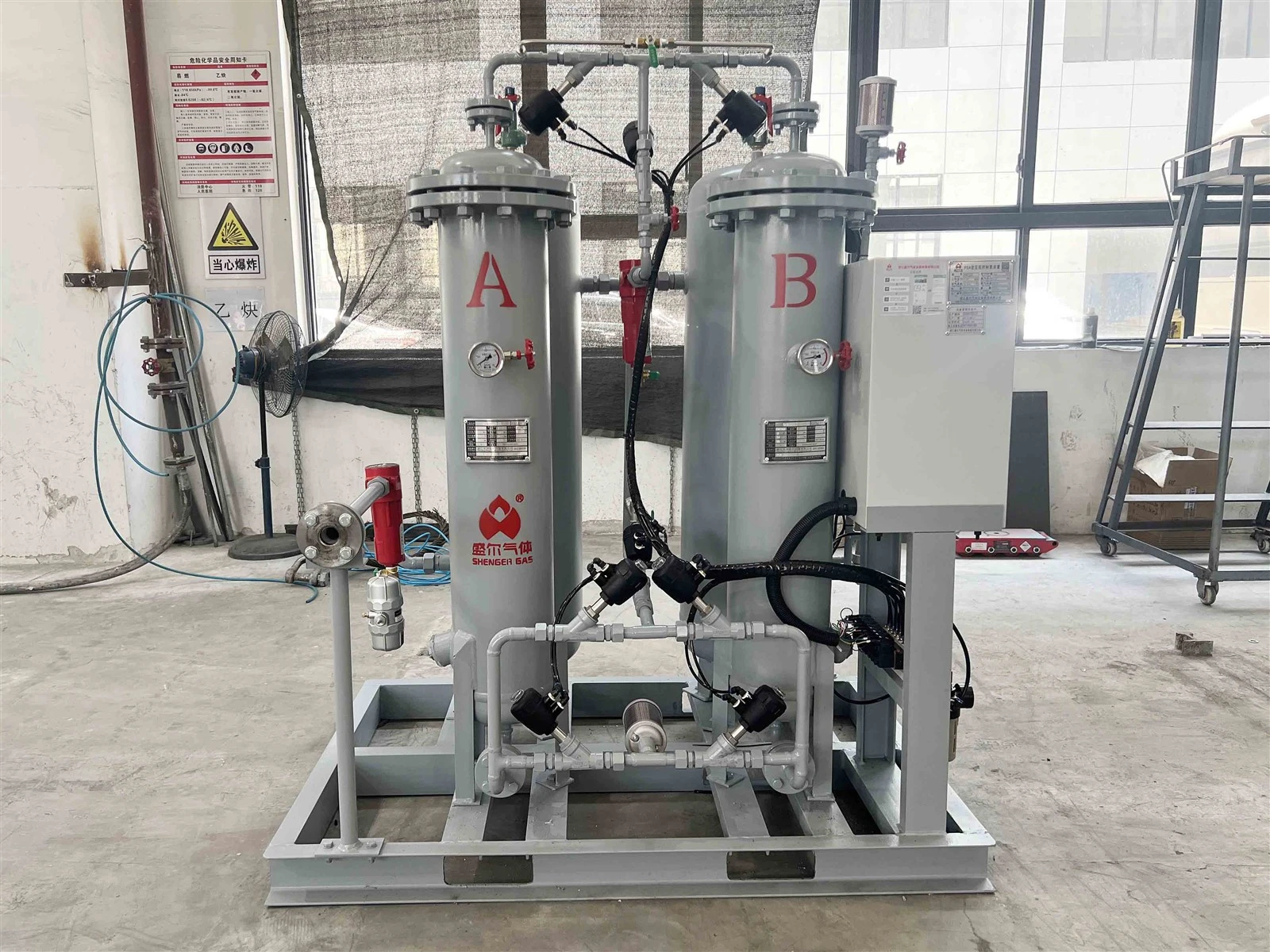
The flow output of a nitrogen generation system depends on multiple interdependent stages. Any deviation at a single point along the chain can compromise the final production rate. Starting from the air intake, moving through the compression unit, purification stage, adsorption separation process, and finally to the delivery point-bottlenecks can emerge anywhere along this path. The most frequently encountered causes fall into several categories: abnormal intake conditions, purification system failure, degraded adsorbent performance, valve timing errors, and leaks in the piping network.
Intake Side Inspection – Trace the Problem to Its Source
The nitrogen production rate is directly influenced by both the volume and quality of incoming air. Begin by verifying that the air compressor is operating within its design parameters and that the discharge pressure matches the specified value. If the compressor is underperforming-due to clogged intake filters or excessive oil separator differential pressure-the volume of air reaching the nitrogen generator will be reduced. Next, check the intake air temperature. Excessively high inlet temperatures lower air density, meaning the actual mass flow rate will be less than expected even when the volumetric flow appears normal. The performance of the refrigeration dryer or desiccant dryer should also be evaluated. Compressed air carrying excessive oil content will gradually contaminate the adsorbent material, progressively diminishing its adsorption capacity. This degradation is slow but will significantly impact output once it accumulates to a certain threshold.
Adsorption Tower and Valve System Diagnostics
For pressure swing adsorption nitrogen generators, the condition of the carbon molecular sieve inside the adsorption towers and the precision of valve actuation are the core determinants of flow performance. When molecular sieve becomes pulverized or poisoned, separation efficiency declines, and the system can no longer maintain the required nitrogen purity. In response, the control logic may shorten equalization times or increase regeneration frequency as a compensatory measure-but this self-adjustment ultimately manifests as reduced production output. When inspecting valves, pay close attention to whether pneumatic actuators and mechanical linkages are traveling through their full stroke and whether opening and closing timing falls within acceptable tolerances. Even if valves appear to cycle normally, worn seals can cause internal bypassing, allowing effective flow to be wasted in internal recirculation rather than delivered to the outlet.
Piping and After-Treatment Component Inspection
Do not overlook the small details within the piping system. Filter elements in precision coalescing filters that have not been replaced on schedule create increasing pressure drops. Internal corrosion or scale buildup inside pipes reduces the effective cross-sectional area available for flow. These hidden sources of resistance gradually eat away at the nitrogen flow that should be reaching the point of use. Additionally, minor leaks at pipe joints-particularly in high-purity nitrogen systems where line sizes are smaller-can translate into substantial flow losses. A practical approach is to take pressure readings at multiple points along the system while it is under normal operating conditions, using pressure differentials to pinpoint the sections where abnormalities are occurring.
Parameter Tuning and Site Condition Mismatches
A mismatch between actual site conditions and the original design parameters of the equipment is another frequent contributor to flow shortfalls. For instance, at higher altitudes where air is thinner, the intake pressure must be increased to maintain the same nitrogen output. During summer months when ambient temperatures rise, the drying system parameters may need recalibration. When instantaneous demand at the user end fluctuates heavily, undersized buffer tanks can cause temporary pressure dips. In these scenarios, the equipment itself is not faulty-it simply requires adjusted operating parameters tailored to the specific conditions on site.
A Logical Troubleshooting Sequence
It is advisable to follow a progression from external to internal, and from simple checks to more complex diagnostics. Start by confirming the operating status of the air compressor and the drying/purification equipment upstream. Then move to the adsorption towers, checking the condition of the sieve material and verifying valve cycling behavior. Next, work through the piping sections segment by segment to identify restrictions and leaks. Finally, cross-check the equipment selection and control parameters against current site conditions. Each step should have a clear basis for judgment-avoid the temptation to replace parts arbitrarily without solid evidence.
Preventive Maintenance Recommendations
Flow problems rarely emerge out of nowhere. Preventive maintenance carried out consistently is far more effective than reactive repairs after performance has already deteriorated. Regularly scheduled filter element replacements, periodic adsorbent performance testing, and proper lubrication of valves and actuators form the foundation of reliable long-term nitrogen generator operation. Maintaining an equipment log that tracks daily production rates, purity readings, and inlet/outlet pressures provides valuable trend data. When these parameters begin to show unusual fluctuations, early warning signs become visible, allowing corrective action before a full-blown failure occurs.
Troubleshooting insufficient nitrogen generator flow is essentially a process of breaking down a complex system into discrete, manageable components and validating each one in turn. With the right approach and a methodical mindset, the majority of flow issues can be resolved on site. If the problem persists after a thorough investigation, engaging a professional technical support team for systematic diagnosis is strongly recommended-hasty repairs performed without proper analysis often result in greater economic losses.
Shenger Gas has long been dedicated to the field of gas separation technology, with extensive hands-on experience in fault diagnosis and performance optimization of nitrogen generation systems. The company remains committed to providing professional, reliable technical support and solutions to its customers.


