
Cryogenic air separation technology is widely used in the production of liquid oxygen. Cryogenic air separation technology, also called "cryogenic air" technology, refers to the technology that uses cryogenic distillation to separate various gas components from the air. Moreover, it has been involved in many industries, especially in producing liquid oxygen by cryogenic air separation, it has shown significant advantages, which fully reflects the core role and technical superiority of cryogenic air separation technology in gas production.
The principle of producing liquid oxygen by cryogenic air separation
Cryogenic air separation is based on different groups of boiling points in different components in the air. At low temperatures, the air is separated into various gas products. Its main products include rare gases such as oxygen, nitrogen, and pheasant, where liquid oxygen is one of the important products. The core of this technology is to create and use the low -temperature environment to achieve the separation of air and the distillation of air.
Air component value comparison
The air is mainly composed of about 78%of nitrogen, about 21%of oxygen, and other small amounts of gases such as gaseous gas and carbon dioxide. The boiling point of these gases at different temperatures is different. Among them, the boiling point of nitrogen is -195.8 ° C, the boiling point of oxygen is -183.0 ° C, and the boiling point of the signs is -185.7 ° C. With these boiling points differences, various gas in the air can be separated through the cryogenic air separation technology.
The main steps in producing liquid oxygen
1. Compressed air
First, the air from the atmosphere was inhaled into the compressor. After multiple levels of compression, the pressure increased to 2-10 mPa. The compression process will increase the air temperature, so the air needs to cool the air to normal temperature by cooler to reduce the energy required for subsequent cooling.
2. Purify air
The compressed air contains impurities such as moisture, carbon dioxide, and hydrocarbons. These impurities will freeze at low temperature to block the pipeline and affect the separation effect. Therefore, these impurities need to be removed through the air purification system.
3. Pre -cold air
The purified air needs to be further cooling to reduce the heat load entering the main heat exchange. Pre -cooling is usually completed by a series of heat exchangers. These heat exchangers use liquefied gas (such as liquid nitrogen) as a cooling medium to cool the air to close to liquefaction temperature.
4. Main heat exchange cooling
After the pre -cold air, the air enters the main heat exchanger, and the heat exchanges heat with the air -flowing gas returned from the top of the distillation tower to further reduce the temperature. The design of the main heat exchange device is very critical, and it is necessary to ensure that the air reaches enough temperature before entering the distillation tower.
5. Air liquefaction
The air temperature after the cooling of the main heat exchange has dropped to about -170 ° C, and the air started to partial liquefaction at this time. In order to further reduce the temperature, the expansion mechanism is usually used. The expander further cools the air to below -190 ° C through thermal expansion process, so that the air is fully liquefied.
6. Separation separation
The liquefied air enters the distillation tower and is separated according to the boiling point differences of each component. The distillation tower is divided into two parts: upper tower and lower tower:
Lower Tower: The liquefied air first enters the lower tower. By evaporation and condensation, nitrogen and oxygen are separated. The nitrogen -rich gas is generated at the top of the lower tower, and oxygen -rich liquid is generated at the bottom.
The upper tower: The oxygen -rich liquid generated by the lower tower enters the upper tower and further separates high purity liquid oxygen. The top of the top of the tower generates high purity nitrogen, and the bottom obtains high purity liquid oxygen.
7. Product extract
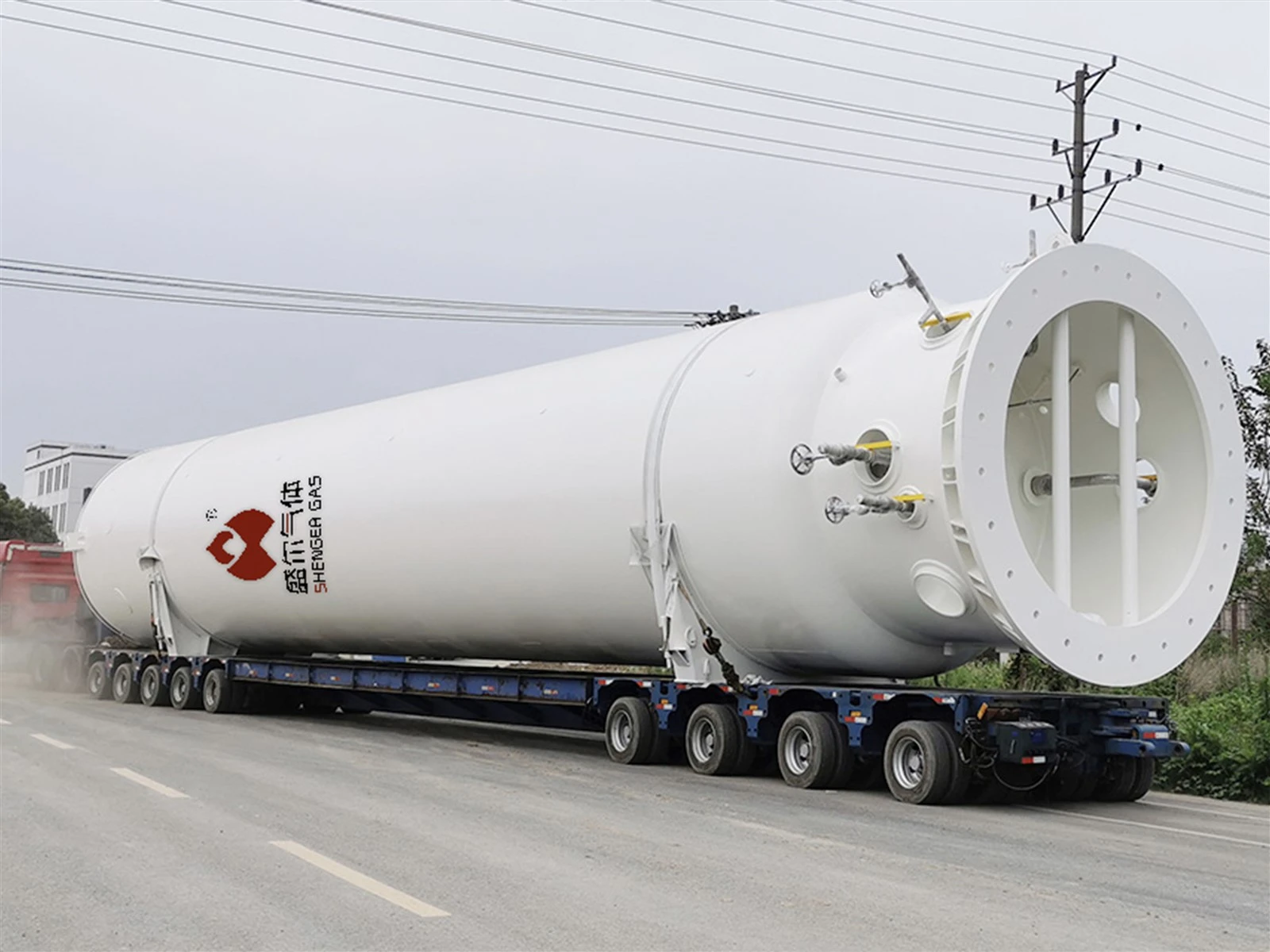
The liquid oxygen extracted from the bottom of the sperm tower is further treated, such as filtering, dehumidification, etc. to ensure product quality. Liquid oxygen can be stored in low -temperature storage, and transported to the user end through the pumping system.
Application of advantages of cryogenic air separation technology
Cryogenic air separation technology is widely used in chemical, metallurgy, medical, aerospace and other fields. In the chemical industry, liquid oxygen is an important oxidant that is used to synthesize the production of chemicals such as ammonia and methanol. In the metallurgical industry, liquid oxygen is used for steel smelting, improving combustion efficiency and product quality. In the medical field, liquid oxygen is used for respiratory treatment and first aid. In the field of aerospace, liquid oxygen, as a rocket propeller, has the characteristics of high energy efficiency and environmental protection.
Producing liquid oxygen by cryogenic air separation is an efficient and reliable air separation method. Through a multi-step cooling and distillation process, high-purity liquid oxygen can be produced. This technology has broad application prospects in many fields, and the future development direction will pay more attention to energy efficiency, miniaturization, intelligence and environmental protection. Through continuous technological innovation and optimization, cryogenic air separation technology will play a greater role in industrial production and environmental protection.


