
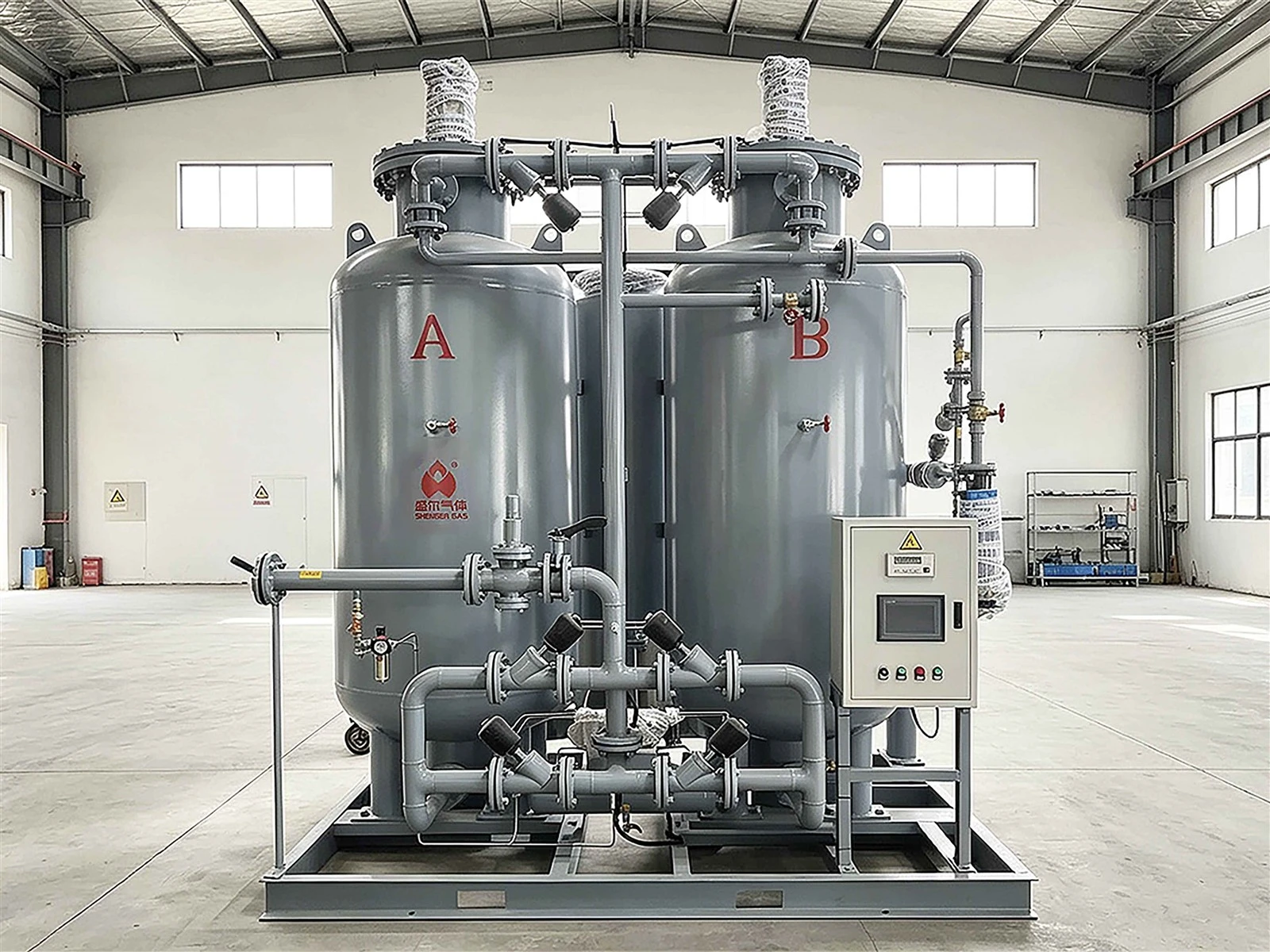
PSA oxygen generators are showing up more and more in industrial, medical, and aquaculture settings - and for good reason. They use molecular sieve to separate nitrogen from oxygen in the air, producing a continuous oxygen supply at ambient temperature and pressure. No cylinder refilling, no transport headaches, no storage concerns. But over time, things can go wrong. And when operators see oxygen purity drop or an alarm light come on, the first instinct is often "the machine is broken." In reality, most issues have a fairly clear troubleshooting path. Below is a rundown of the most common faults and what to check first.
Oxygen Purity Drops While the Unit Is Still Running
This is the most frequent complaint. Falling purity doesn't automatically mean the sieve is spent. Start by checking whether demand has suddenly increased - if flow exceeds the rated capacity, purity will drop. Next, look at inlet air temperature. High intake temps, especially in summer or in a poorly ventilated compressor room, reduce adsorption efficiency. One more thing people miss: the drain valve. If condensate isn't being removed properly, water carries into the adsorption towers and disrupts separation.
What to do: Verify actual flow against the unit's rated capacity. Check compressor discharge temperature and dryer performance. Confirm the auto-drain isn't clogged. If all that checks out, then consider sieve degradation or moisture contamination. Once molecular sieve is fouled by oil or water, it rarely recovers - replacement is usually the only option.
Adsorption Tower Pressure Won't Hold or Fluctuates
Pressure problems usually trace back to valves or piping. Listen for the switching valves - if one is sticking or not sealing properly, pressure between the two towers will swing. Sometimes it's a burned-out solenoid coil; sometimes it's insufficient pilot pressure preventing the valve from fully actuating.
What to do: Confirm supply pressure is within the unit's required range. Check solenoid indicator lights. Feel for vibration when valves cycle. If a valve is leaking internally, it typically needs disassembly or seal replacement. On the piping side, inspect for leaks - quick-connect fittings and flexible hose joints are common culprits.
Unit Alarms and Shuts Down
Alarms look alarming, but many are protective shutdowns. High temperature, high pressure, low purity - the unit will stop itself. Don't force repeated restarts. Read the alarm code or message first and trace it to the source.
What to do: Temperature alarm - check cooling fans and ventilation. Pressure alarm - check for downstream blockage or a closed valve. Purity alarm - refer to section one. Before resetting, make sure the fault condition is actually cleared. Repeated start-stop cycles put serious wear on the machine.
Increased Noise or Abnormal Sounds
Some cyclic exhaust noise is normal on a PSA unit. But if it becomes sharp, dull, or irregular, pay attention. Common causes: clogged muffler, abnormal exhaust valve action, loose compressor belt.
What to do: Check whether the muffler needs cleaning or replacement. Inspect exhaust valves for debris. If the noise is coming from the compressor, follow its maintenance schedule. Noise issues that drag on usually mean a component is wearing faster than it should - fixing it early saves money later.
Odor or Moisture in the Oxygen Output
Oxygen from a PSA unit should be odorless and dry. If you smell oil or feel moisture, the problem is upstream. Oil odor usually means compressor carryover. Moisture points to a dryer or drain issue.
What to do: Check the compressor's oil separator. Confirm the refrigerated dryer is draining properly. Replace pre-filter elements as needed. These problems don't just affect oxygen quality - they shorten sieve life. Deal with them promptly.
Maintenance Matters More Than Repair
Honestly, most PSA oxygen generator faults come down to neglected maintenance. Inlet air quality, drainage, heat dissipation, valve cycling - if these get regular attention, uptime improves dramatically. Rather than waiting for a breakdown, use a checklist. Log pressure, temperature, and purity readings. Watch for trends and intervene early.
Shenger Gas has built up solid experience in PSA oxygen generator design and system integration. Equipment stability isn't just about configuration - it's closely tied to how the system is operated on site. Understand the common faults, follow a disciplined maintenance routine, and most problems get caught early enough that they never disrupt your oxygen supply.


