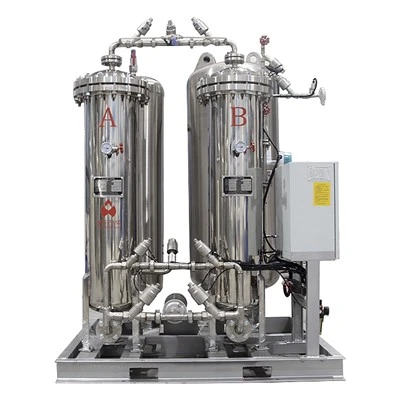
The membrane in a membrane-type nitrogen generator for gas chromatography (GC) plays a crucial role in the separation process, enabling the production of high-purity nitrogen gas. As a leading supplier of Nitrogen Generators for GC, we often receive inquiries about the service life of these membranes. Understanding the factors that influence the membrane's lifespan is essential for ensuring optimal performance and cost-effective operation of the nitrogen generator.
Factors Affecting the Service Life of Membranes
1. Feed Gas Quality
The quality of the feed gas is one of the most significant factors affecting the membrane's service life. Impurities such as oil, water, and particulate matter can accumulate on the membrane surface, reducing its permeability and separation efficiency. For instance, oil vapors can coat the membrane pores, blocking the passage of nitrogen molecules and increasing the resistance to gas flow. Water can cause swelling and degradation of the membrane material, leading to a loss of selectivity and performance. Particulate matter can physically damage the membrane, creating leaks and reducing its overall integrity.


To mitigate the effects of feed gas impurities, it is essential to use proper pre-filtration systems. These systems typically include coalescing filters to remove oil and water droplets, activated carbon filters to adsorb oil vapors, and particulate filters to remove solid particles. Regular maintenance and replacement of these filters are necessary to ensure their effectiveness in protecting the membrane.
2. Operating Conditions
The operating conditions of the nitrogen generator, such as temperature, pressure, and flow rate, can also impact the membrane's service life. High temperatures can accelerate the degradation of the membrane material, reducing its mechanical strength and chemical stability. Excessive pressure can cause the membrane to stretch or rupture, leading to a loss of separation efficiency. Additionally, high flow rates can increase the shear stress on the membrane, causing physical damage and reducing its lifespan.
It is important to operate the nitrogen generator within the recommended temperature, pressure, and flow rate ranges specified by the manufacturer. Monitoring these parameters regularly and making adjustments as needed can help extend the membrane's service life.
3. Membrane Material and Design
The choice of membrane material and design can significantly influence its service life. Different membrane materials have varying degrees of chemical resistance, mechanical strength, and permeability. For example, some membranes are more resistant to high temperatures and chemical exposure, while others offer higher selectivity and separation efficiency.
In addition to the material, the membrane's design, such as its thickness, pore size, and surface area, can also affect its performance and lifespan. A well-designed membrane with a uniform pore structure and high surface area can provide better separation efficiency and longer service life.
Typical Service Life of Membranes
The service life of membranes in a membrane-type nitrogen generator for GC can vary widely depending on the factors mentioned above. In general, under normal operating conditions with proper pre-filtration and maintenance, the membranes can last anywhere from 2 to 5 years. However, in some cases, where the feed gas quality is poor or the operating conditions are harsh, the membrane's service life may be significantly shorter.
It is important to note that the service life of the membrane is not a fixed value and can be affected by many factors. Regular monitoring of the nitrogen generator's performance, such as the nitrogen purity and flow rate, can help detect any signs of membrane degradation early on. If the nitrogen purity starts to decline or the flow rate decreases, it may indicate that the membrane needs to be replaced.
Extending the Service Life of Membranes
To extend the service life of the membranes in a membrane-type nitrogen generator for GC, the following measures can be taken:
1. Ensure High-Quality Feed Gas
As mentioned earlier, the quality of the feed gas is crucial for the membrane's longevity. Using proper pre-filtration systems and regularly maintaining and replacing the filters can help remove impurities from the feed gas and protect the membrane.
2. Optimize Operating Conditions
Operating the nitrogen generator within the recommended temperature, pressure, and flow rate ranges can help prevent excessive stress on the membrane and reduce the risk of damage. Regular monitoring of these parameters and making adjustments as needed can help ensure optimal performance and extend the membrane's service life.
3. Perform Regular Maintenance
Regular maintenance of the nitrogen generator, including cleaning, inspection, and calibration, can help detect any potential issues early on and prevent them from causing damage to the membrane. Following the manufacturer's recommended maintenance schedule and procedures is essential for ensuring the long-term reliability and performance of the nitrogen generator.
Our Nitrogen Generators for GC
As a trusted supplier of Nitrogen Generators for GC, we offer a range of high-quality membrane-type nitrogen generators that are designed to provide reliable and efficient nitrogen gas generation. Our generators are equipped with advanced pre-filtration systems to ensure the quality of the feed gas and protect the membranes. We also provide comprehensive technical support and maintenance services to help our customers extend the service life of their membranes and ensure optimal performance of their nitrogen generators.
If you are interested in our 97% PSA Nitrogen Generator, Nitrogen Generator For PCB Manufacturing, or Renewable Energy Nitrogen Generation solutions, or if you have any questions about the service life of the membranes in our nitrogen generators, please feel free to contact us. Our team of experts is ready to assist you with your nitrogen generation needs and provide you with the best solutions for your application.
References
- "Membrane Separation Technology: Principles and Applications" by R. W. Baker
- "Gas Separation Membranes: Polymer Science and Technology" by Y. Yampolskii, A. Pinnau, and H. Freeman
- Manufacturer's documentation for membrane-type nitrogen generators