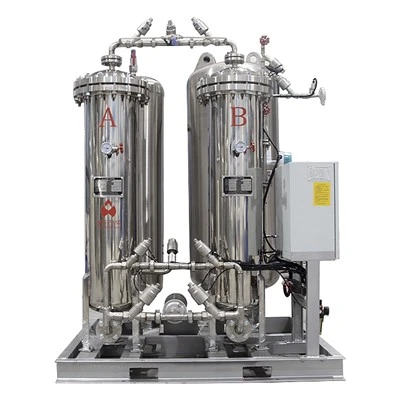
Hey there! As a supplier of dry nitrogen generators, I've seen firsthand how crucial it is to understand the ins and outs of these machines. One key factor that can significantly impact the performance of a dry nitrogen generator is the gas flow rate. In this blog post, I'll dive into what the influence of gas flow rate is on the performance of a dry nitrogen generator and why it matters for your business.
Understanding Gas Flow Rate
First off, let's talk about what gas flow rate actually means. Gas flow rate refers to the volume of gas that passes through a specific point in a given amount of time. It's usually measured in cubic feet per minute (CFM) or liters per minute (LPM). In the context of a dry nitrogen generator, the gas flow rate determines how much nitrogen can be produced and delivered within a certain timeframe.
Impact on Nitrogen Purity
One of the most significant impacts of gas flow rate on the performance of a dry nitrogen generator is its effect on nitrogen purity. Nitrogen purity is a critical factor, especially in industries where high - quality nitrogen is required, such as electronics manufacturing. When the gas flow rate is too high, the nitrogen generator may not have enough time to effectively separate nitrogen from other gases in the air. This can result in lower nitrogen purity levels.


For example, in a High Purity Nitrogen Plant For Electronics, maintaining a high level of nitrogen purity is essential to ensure the quality of electronic components. If the gas flow rate is not properly regulated, impurities in the nitrogen can cause defects in the manufacturing process. On the other hand, if the gas flow rate is too low, the production capacity of the nitrogen generator will be limited, which may not meet the demands of your business.
Effect on Production Capacity
The gas flow rate also directly affects the production capacity of a dry nitrogen generator. A higher gas flow rate generally means that more nitrogen can be produced in a shorter period. However, as mentioned earlier, there's a trade - off between production capacity and nitrogen purity.
Let's say you're running a large - scale industrial operation that requires a continuous supply of nitrogen. You might be tempted to increase the gas flow rate to boost production. But if you push the flow rate too high, the purity of the nitrogen will drop, and you may end up with a product that doesn't meet your quality standards. So, finding the right balance is crucial. Our PSA Nitrogen Generator System is designed to offer a good balance between production capacity and nitrogen purity, allowing you to optimize your operations.
Influence on Energy Consumption
Another important aspect to consider is the influence of gas flow rate on energy consumption. Generally, a higher gas flow rate requires more energy to operate the compressor and other components of the nitrogen generator. This means that if you set the gas flow rate higher than necessary, you'll end up spending more on energy costs.
On the flip side, if the gas flow rate is set too low, the generator may run inefficiently, also leading to increased energy consumption. For instance, the compressor may have to work harder to maintain the required pressure. Therefore, it's essential to determine the optimal gas flow rate for your specific application to minimize energy costs and improve the overall efficiency of the dry nitrogen generator. Our Integrated Nitrogen Production Equipment is engineered to operate at an energy - efficient gas flow rate, helping you save on operational costs.
Impact on Equipment Lifespan
The gas flow rate can also have an impact on the lifespan of the dry nitrogen generator. When the gas flow rate is too high, the components of the generator, such as the adsorbent beds and valves, are subjected to more stress. This can lead to increased wear and tear, reducing the lifespan of the equipment and increasing the frequency of maintenance and replacement.
Conversely, a very low gas flow rate may cause the equipment to operate in an unstable manner, which can also have a negative impact on its longevity. By setting the gas flow rate at the optimal level, you can ensure that the generator operates smoothly and lasts for a longer time, saving you money on equipment replacement in the long run.
Determining the Optimal Gas Flow Rate
So, how do you determine the optimal gas flow rate for your dry nitrogen generator? Well, it depends on several factors, including your specific application, the required nitrogen purity, and the production capacity you need.
For example, if you're using nitrogen for food packaging, you may not need extremely high - purity nitrogen, so you can afford to have a relatively higher gas flow rate to increase production. However, if you're in the pharmaceutical industry, where high - purity nitrogen is a must, you'll need to set a lower gas flow rate to maintain the required purity levels.
It's also a good idea to consult with a professional or the manufacturer of the nitrogen generator. We, as a dry nitrogen generator supplier, have the expertise and experience to help you determine the optimal gas flow rate for your particular needs. We can analyze your requirements and provide you with customized solutions to ensure that your nitrogen generator performs at its best.
Conclusion
In conclusion, the gas flow rate has a significant influence on the performance of a dry nitrogen generator. It affects nitrogen purity, production capacity, energy consumption, and equipment lifespan. Finding the optimal gas flow rate is crucial for ensuring the quality of the nitrogen produced, meeting your production needs, and minimizing operational costs.
If you're in the market for a dry nitrogen generator or need help optimizing the gas flow rate of your existing equipment, don't hesitate to reach out. We're here to assist you in making the right decisions for your business. Contact us today to start a conversation about your nitrogen generation requirements and let's work together to find the best solution for you.
References
- Smith, J. (2020). "Principles of Nitrogen Generation". Industrial Gas Journal.
- Brown, A. (2021). "Optimizing Gas Flow Rates in Nitrogen Generators". Chemical Engineering Review.