Can a nitrogen generator device be used in the pharmaceutical industry?
In the highly regulated and precision - driven pharmaceutical industry, the choice of equipment and materials is of utmost importance. One such piece of equipment that has gained significant attention is the nitrogen generator device. As a supplier of nitrogen generator devices, I am well - positioned to explore the viability and benefits of using these devices in the pharmaceutical industry.
The Need for Nitrogen in the Pharmaceutical Industry
Nitrogen plays a crucial role in various pharmaceutical processes. First and foremost, it is used for inerting. Inerting is a process where an inert gas, such as nitrogen, is used to displace oxygen in a container or a process environment. Oxygen can cause oxidation of pharmaceutical products, which may lead to degradation, loss of potency, and the formation of harmful by - products. By using nitrogen to create an oxygen - free environment, the shelf - life and quality of pharmaceutical products can be significantly extended.
For example, in the storage of sensitive drugs, nitrogen can be introduced into the storage containers. This prevents the drugs from reacting with oxygen in the air, ensuring that they remain stable and effective until they are used. Similarly, during the manufacturing process, nitrogen can be used to purge reaction vessels and packaging equipment to remove oxygen and moisture, which are both detrimental to the quality of pharmaceutical products.
Another important application of nitrogen in the pharmaceutical industry is in the packaging process. Modified atmosphere packaging (MAP) using nitrogen is a common practice. By replacing the air in a package with nitrogen, the growth of aerobic microorganisms can be inhibited, and the product's freshness and stability can be maintained. This is particularly important for pharmaceutical products that are prone to spoilage or degradation, such as liquid medications and some types of antibiotics.
How Nitrogen Generator Devices Work
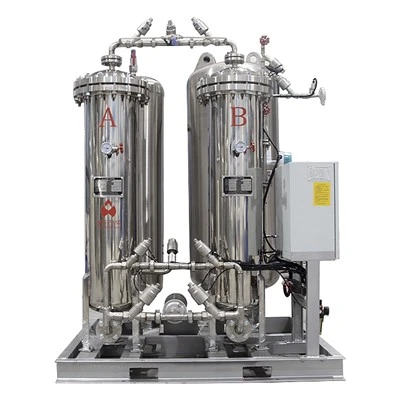
Nitrogen generator devices typically operate based on two main principles: pressure swing adsorption (PSA) and membrane separation.
PSA nitrogen generators use a bed of adsorbent material, usually zeolite, to selectively adsorb oxygen from compressed air. When the compressed air passes through the adsorbent bed, the oxygen molecules are trapped by the adsorbent, while the nitrogen molecules pass through and are collected as the product gas. The adsorbent bed can be regenerated by reducing the pressure, allowing the adsorbed oxygen to be released. This cyclic process enables continuous production of nitrogen.
Membrane nitrogen generators, on the other hand, use a semi - permeable membrane. Compressed air is fed into the membrane module, and due to the different permeation rates of oxygen and nitrogen through the membrane, oxygen and other impurities are preferentially removed, leaving behind a stream of nitrogen - enriched gas.
Advantages of Using Nitrogen Generator Devices in the Pharmaceutical Industry
- Cost - effectiveness: Purchasing nitrogen in cylinders or from liquid nitrogen suppliers can be expensive, especially for large - scale pharmaceutical operations. A nitrogen generator device allows pharmaceutical companies to produce their own nitrogen on - site, eliminating the need for frequent cylinder deliveries and the associated costs. Over time, this can result in significant cost savings.
- Purity control: Nitrogen generator devices can be designed to produce nitrogen with a high degree of purity. In the pharmaceutical industry, where product quality is non - negotiable, the ability to control the purity of the nitrogen used in various processes is crucial. Different pharmaceutical applications may require different levels of nitrogen purity, and a nitrogen generator can be adjusted to meet these specific requirements.
- Reliability: On - site nitrogen generation provides a continuous and reliable supply of nitrogen. Pharmaceutical manufacturing processes often operate around the clock, and any interruption in the nitrogen supply can lead to production delays and product quality issues. With a nitrogen generator device, companies can ensure a consistent supply of nitrogen, reducing the risk of production downtime.
- Safety: Using on - site nitrogen generators reduces the risks associated with handling and storing large quantities of nitrogen cylinders or liquid nitrogen. Cylinders can pose a risk of explosion or leakage if not handled properly, and liquid nitrogen requires special storage and handling procedures due to its extremely low temperature.
Specific Applications in the Pharmaceutical Industry
- Drug manufacturing: During the synthesis of pharmaceutical compounds, nitrogen can be used to provide an inert atmosphere in reaction vessels. This prevents unwanted oxidation and side reactions, ensuring the high yield and purity of the final product. For example, in the production of some anti - cancer drugs, nitrogen is used to maintain a stable reaction environment.
- Lyophilization: Also known as freeze - drying, lyophilization is a common process in the pharmaceutical industry for preserving sensitive drugs. Nitrogen is used in this process to displace oxygen and prevent oxidation of the drug during the drying process. It also helps to maintain a stable pressure and temperature inside the lyophilization chamber.
- Quality control laboratories: Nitrogen is used in various analytical instruments in pharmaceutical quality control laboratories. For instance, gas chromatography - mass spectrometry (GC - MS) systems often use nitrogen as a carrier gas. A reliable nitrogen generator can ensure the continuous operation of these instruments, improving the accuracy and efficiency of quality control testing.
Other Applications of Nitrogen Generator Devices
Apart from the pharmaceutical industry, nitrogen generator devices have a wide range of applications in other sectors. For example, the Offshore Platform Containerized Nitrogen Generator is designed for use in offshore platforms. It provides a reliable source of nitrogen for various applications such as pipeline purging, inerting of storage tanks, and instrument air supply in a harsh marine environment.
In the food and beverage industry, the Beer Nitrogen Generator is used to create a nitrogen - rich environment in beer kegs. Nitrogen gives beer a smooth and creamy texture and helps to preserve its flavor.
The Mobile Nitrogen Generator for Pipeline Purging is a versatile solution for pipeline maintenance and construction projects. It can be easily transported to different sites and used to purge pipelines of oxygen, moisture, and other contaminants.
Conclusion and Call to Action
In conclusion, nitrogen generator devices are highly suitable for use in the pharmaceutical industry. They offer numerous benefits, including cost - effectiveness, purity control, reliability, and safety. Whether it is for drug manufacturing, packaging, or quality control, a nitrogen generator can play a vital role in ensuring the high quality and stability of pharmaceutical products.
If you are a pharmaceutical company looking for a reliable nitrogen supply solution, I encourage you to consider our nitrogen generator devices. Our products are designed with the latest technology and are built to meet the strict quality and performance requirements of the pharmaceutical industry. Contact us today to discuss your specific needs and to start a procurement negotiation that will help you optimize your pharmaceutical processes.


References
- Smith, J. (2018). Nitrogen in the Pharmaceutical Industry: Applications and Benefits. Journal of Pharmaceutical Sciences, 107(2), 456 - 462.
- Johnson, A. (2019). On - Site Nitrogen Generation: A Cost - Effective Solution for Industrial Applications. Industrial Gas Journal, 34(3), 78 - 85.
- Brown, C. (2020). The Role of Nitrogen in Modified Atmosphere Packaging of Pharmaceutical Products. Packaging Technology and Science, 33(4), 234 - 241.