


Large Scale Air Separation Equipment
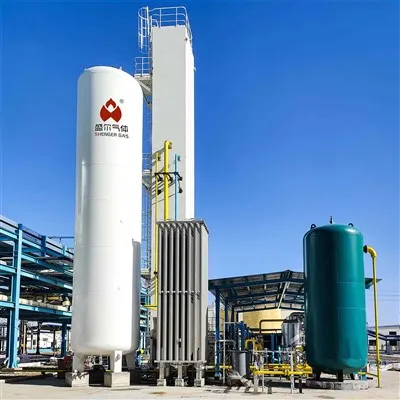
In modern industrial operations, the demand for high-purity oxygen, nitrogen, and argon continues to rise across sectors such as metallurgy, petrochemicals, and coal gasification. At the heart of these supply chains lies large scale air separation equipment, a system designed to separate atmospheric air into its primary components through cryogenic distillation. Unlike smaller packaged units, these industrial-scale plants operate continuously at high capacities, often exceeding 10,000 Nm³/h, and require meticulous engineering to balance efficiency with long-term reliability.
Core Principle of Operation
The working mechanism is based on the cryogenic rectification process. Atmospheric air is first filtered, compressed, and pre-cooled before passing through molecular sieve adsorbers that remove water vapor, carbon dioxide, and hydrocarbons. The purified air then enters a main heat exchanger where it is cooled to near-liquid temperatures (approximately -170°C to -190°C). This liquefied air feeds into a high-pressure distillation column, where the difference in boiling points between nitrogen (-196°C) and oxygen (-183°C) enables fractional separation. The large scale air separation equipment uses a dual-column arrangement (low-pressure and high-pressure columns) to achieve over 99.6% oxygen purity and 99.999% nitrogen purity simultaneously, with argon extracted via a side-stream crude argon column.
Key Performance Parameters
To provide a transparent basis for process design, below are the typical operational ranges for a standard cryogenic air separation plant:
| Parameter | Range / Value |
|---|---|
| Product Purity (O₂) | 99.6% – 99.8% (standard); up to 99.999% (medical grade) |
| Product Purity (N₂) | 99.999% (with optional deoxidation unit) |
| Flow Rate (O₂/N₂) | 1,000 – 60,000 Nm³/h (customizable) |
| Argon Recovery Rate | 70% – 90% (depending on configuration) |
| Operating Temperature Range | -196°C (bottom of LP column) to -178°C (top of HP column) |
| Specific Energy Consumption | 0.38 – 0.52 kWh/Nm³ O₂ (at 0.6 MPa discharge) |
Temperature & Energy Considerations
The entire cold box operates under cryogenic conditions, with a temperature differential of less than 5°C across the main reboiler-condenser to minimize exergy loss. Advanced turbo-expanders with magnetic bearings reduce friction, while optimized plate-fin heat exchangers maintain approach temperatures as low as 2°C. For large scale air separation equipment, the specific power consumption directly correlates with air compression pressure – typically 0.5–0.65 MPa for the main air compressor. Modern plants integrate waste heat recovery from compressor intercoolers to preheat regeneration gas for molecular sieves, lowering overall steam or electricity demand by 8–12%.
Technical Specifications & Control Systems
All units feature a DCS (Distributed Control System) with redundant PLC backups, supporting real-time trend logging and remote diagnostics. The cold box is fabricated from 5083 aluminum alloy, with all welds undergoing 100% radiographic inspection. Distillation trays are designed with 4–6 pass cross-flow geometry to ensure even vapor-liquid distribution. The large scale air separation equipment includes integrated online analyzers (paramagnetic O₂, thermal conductivity H₂, and trace hydrocarbon detectors) that interface with automatic vent/recirculation valves. Turndown ratio reaches 60%–110% without product loss, accommodating variable downstream demand.
Industrial Applications
These systems serve as the primary gas source for:
- Ferrous/non-ferrous smelting (oxygen enrichment for blast furnaces and electric arc furnaces)
- Chemical synthesis (nitrogen blanketing for ammonia/methanol production)
- Coal-to-olefins and gasification (high-pressure oxygen for partial oxidation)
- Electronics manufacturing (ultra-high-purity nitrogen for soldering atmospheres)
- Glass melting and float glass lines (oxygen for combustion intensification)
- Pulp & paper bleaching (oxygen delignification) and wastewater treatment (aerobic digestion)
Every application demands specific pressure and purity profiles, which directly influence the distillation staging and compression train design.
Certifications & Project Execution
Our engineering workflow complies with ASME, PED 2014/68/EU, and GB/T 150 pressure vessel standards. Each skid-mounted module undergoes helium leak testing (≤1×10⁻⁶ mbar·l/s) and cryogenic impact tests at -196°C. Project delivery follows a structured 5-phase gate model: basic design → HAZOP review → 3D piping modeling (SmartPlant) → factory acceptance test → site installation supervision. We provide complete documentation packages including O&M manuals, material traceability reports, and NDT records.
Customization Capability
Rather than offering rigid catalogs, we tailor every aspect – from air compressor type (centrifugal vs. integrally geared) to cold box layout (horizontal vs. vertical). Variables such as ambient temperature, altitude, cooling water quality, and power frequency are incorporated into the heat and mass balance calculations. For large scale air separation equipment destined for hydrogen or carbon monoxide co-production, we can integrate membrane separation pre-filters or catalytic deoxo reactors. Customization also extends to control philosophies: choose between constant-flow, variable-flow, or load-following modes.
Service & Lifecycle Support
Beyond commissioning, we offer remote predictive maintenance using IoT vibration sensors and oil analysis. Our service portfolio covers spare parts consignment (compressors, expander cartridges, molecular sieve), annual performance audit (purity/flow/efficiency), and revamp studies for capacity debottlenecking. Technical assistance is available within 12 hours globally via encrypted remote access, while field teams are deployed for scheduled turnarounds. All rotating equipment comes with a 24-month operational warranty, and we provide operator training sessions using dynamic simulation software prior to startup.
Beyond Core Components – Critical Auxiliary Considerations
A critical yet often overlooked factor is the air inlet filtration system – high-efficiency pulse-jet filters with 0.3µm capture efficiency protect the main compressor from coastal or desert dust, directly impacting rotor lifespan. Similarly, water cooling tower design must account for seasonal wet-bulb temperature variations to prevent compressor surge. Our process design includes a spare liquid backup system (LOX/LIN tanks) to cover brief power fluctuations, ensuring uninterrupted gas supply for continuous processes.
At Shenger Gas, we approach each cryogenic plant as a unique energy ecosystem. Our technical team brings decades of hands-on experience in large-turbine matching, cold-box stress analysis, and automated purging sequences. We do not simply manufacture standard units; we co-engineer solutions that align with your site-specific constraints and production targets. Whether your priority is the lowest life-cycle cost, the highest argon extraction, or the fastest start-up time, Shenger Gas delivers large scale air separation equipment that performs predictably, year after year, with transparent data and accountable execution.


Hot Tags: large scale air separation equipment, China large scale air separation equipment manufacturers, suppliers, factory, Cryogenic Liquid Nitrogen Plant
You Might Also Like


Send Inquiry