


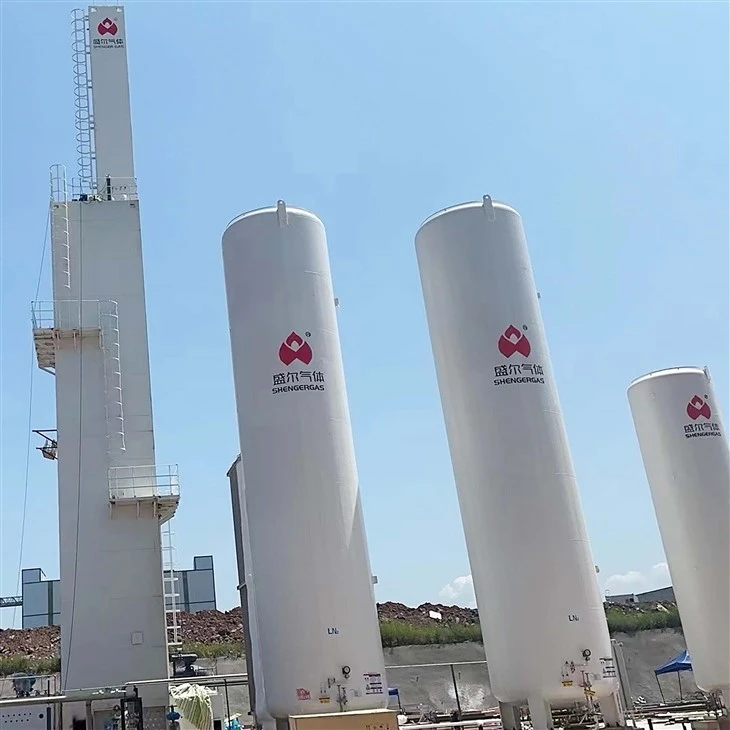
Cryogenic Oxygen Plant For Steel Industry
In steel production, oxygen is essential for smelting reactions and combustion efficiency. Whether for blast furnace oxygen enrichment or EAF melting, oxygen purity and supply stability directly impact cost per ton and process coordination. As a mature large-scale oxygen production technology, the cryogenic oxygen plant for steel industry serves as the core gas source, offering high separation efficiency, long operating cycles, and broad product adaptability.
One system tailored to steel production gas demand
Unlike intermittent oxygen use in other industries, steel production features continuous operation, load fluctuations, and simultaneous gas consumption across multiple points. A well-adapted cryogenic oxygen plant for steel industry must address:
- Main oxygen flow: Base demand for ironmaking and steelmaking
- Peak regulation: Short-term high loads such as oxygen blowing
- Byproduct utilization: Nitrogen recovery for protective atmospheres and powder conveying
Designed around steel process requirements, this series enables simultaneous extraction of oxygen, nitrogen, and argon, avoiding resource waste in single-product modes.
Process: value of cryogenic distillation
Cryogenic air separation uses physical separation based on boiling point differences. The closed-loop process includes:
- Air compression & purification: Three-stage compression with molecular sieve adsorption to remove moisture and CO₂
- Fractionation: Gradual cooling in the cold box, followed by gas-liquid contact in the distillation column for oxygen enrichment
- Rewarming & delivery: Low-temperature oxygen is rewarmed and piped to the steelmaking shop
Advantages: oxygen purity ≥99.6% with minimal long-term decay, and a chemical-free process ensuring high product cleanliness.
Specifications & operating parameters
Typical performance (6,000–20,000 Nm³/h oxygen range):
| Parameter | Value |
|---|---|
| Oxygen output | 6,000–20,000 Nm³/h (adjustable) |
| Purity | O₂ ≥99.6% / N₂ ≤10ppm O₂ |
| Power consumption | 0.38–0.44 kWh/Nm³ |
| Startup time | ≤24 hours (cold start) |
| Annual runtime | ≥8,000 hours |
| Load range | 50%–105% |
Design purity is maintained even at 50% load, adapting to market-driven production adjustments. Power consumption is calculated on a full-process basis for accurate cost accounting.
Targeted design for steel plant conditions
Adaptations for high dust, grid fluctuations, compact layouts, and heat radiation include:
- Layout: Cold box in steel structure; compressor unit in cleaner air area
- Electrical: High-voltage direct or soft start; control cabinets in air-conditioned rooms
- Cooling: Closed cooling towers or plate heat exchangers based on site water conditions
For plants with low-grade waste heat (e.g., blast furnace slag water, steam), the system can integrate waste heat for molecular sieve regeneration to reduce operating costs.
Quality & compliance
Design, manufacturing, and inspection follow industry standards:
- Pressure vessels: ASME or GB/T 150, with third-party inspection
- Welding: ISO 3834, certified welders
- Pre-delivery: Leak testing and cold box cold check
- Deliverables: Complete as-built drawings, certificates, inspection reports, O&M manuals
Engineering services & delivery
Structured for tight steel project schedules:
- Design: Equipment selection and layout based on site conditions and load profiles
- Manufacturing: Core components prefabricated to shorten on-site work
- Installation & commissioning: Full process from positioning to interlock testing
- Performance test: 72-hour full-load operation to verify key metrics
- After-sales: On-site training, spare parts list, and rapid technical support
Operating cost considerations
Power accounts for 60–70% of lifecycle costs. Efficiency measures include optimized distillation columns, high-efficiency expanders, and variable-frequency compressors.
Periodic maintenance covers molecular sieves, lubricants, filters, and expander bearings. A well-planned maintenance strategy is key to long-term reliability.


Hot Tags: cryogenic oxygen plant for steel industry, China cryogenic oxygen plant for steel industry manufacturers, suppliers, factory
You Might Also Like


Send Inquiry